










1. مقدمة
Accurate liquid level measurement is essential for many industrial applications, including storage tanks, water tanks, chemical tanks, slurry tanks, wastewater systems, and wet-dry feeders. Whether the goal is to prevent overflow, protect pumps, monitor material consumption, or improve process automation, choosing the right level measurement technology directly affects system reliability and maintenance costs.
أن ultrasonic liquid level sensor is a widely used non-contact liquid level sensor for industrial tank level measurement. Instead of touching the liquid directly, the sensor emits ultrasonic waves toward the liquid surface and measures the time it takes for the echo to return. This makes ultrasonic technology especially useful in applications where contact with the medium may cause contamination, corrosion, mechanical wear, or frequent maintenance.
Compared with traditional contact-type devices such as float level switches or pressure level transmitters, an industrial ultrasonic level sensor offers several practical advantages. It can measure liquid levels without moving parts, reduce the risk of sensor fouling, and provide continuous level data for tanks and process equipment. For water, chemicals, slurry, and other industrial media, ultrasonic level sensors can be a cost-effective and flexible solution when selected and installed correctly.
However, not every ultrasonic level sensor is suitable for every tank. Before selecting a sensor, engineers and equipment manufacturers need to consider several key factors, including the measuring range, blind zone, output signal, tank environment, liquid type, installation conditions, and required accuracy. For example, a small water tank may only require a compact 2m ultrasonic level sensor, while a larger industrial tank may need a 4m or 6m range sensor with analog output such as 4-20mA or 0-10V.
In this guide, we will explain how to choose the right ultrasonic liquid level sensor for industrial tanks, covering the most important selection factors and typical application recommendations. This will help you select a suitable sensor for stable, accurate, and long-term tank level measurement.
2. What Is an Ultrasonic Liquid Level Sensor?
An ultrasonic liquid level sensor is a non-contact device used to measure the level of liquid inside a tank, container, or process vessel. It works by emitting high-frequency ultrasonic pulses from the sensor face toward the liquid surface. When these sound waves reach the liquid surface, they are reflected back to the sensor. The sensor then calculates the distance based on the time it takes for the echo to return, which is known as time-of-flight measurement.
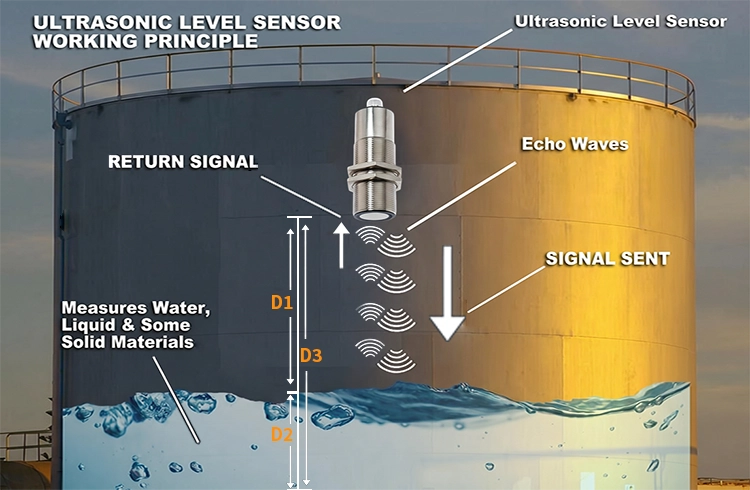
In a typical tank level measurement application, the sensor is mounted at the top of the tank and points downward toward the liquid surface. The measured distance is the gap between the sensor and the liquid surface. To calculate the actual liquid level, the system subtracts this measured distance from the total tank height.
For example:
D2(Liquid level) = D3(sensor install height) – D1(Distance from sensor to liquid surface)
Because the sensor does not need to touch the liquid, an ultrasonic level sensor is especially suitable for applications where direct contact may cause contamination, corrosion, or mechanical wear. This makes it a practical choice for water tanks, chemical tanks, wastewater systems, slurry tanks, and other industrial containers.
Another advantage of ultrasonic level measurement is its flexibility. Ultrasonic sensors can be used not only for clean liquid surfaces, but also for certain slurries, powders, granular materials, and bulk solids, depending on the surface condition and installation environment. For applications involving corrosive liquids or wet-dry feeders, an anti-corrosion ultrasonic level sensor can provide more reliable long-term performance.
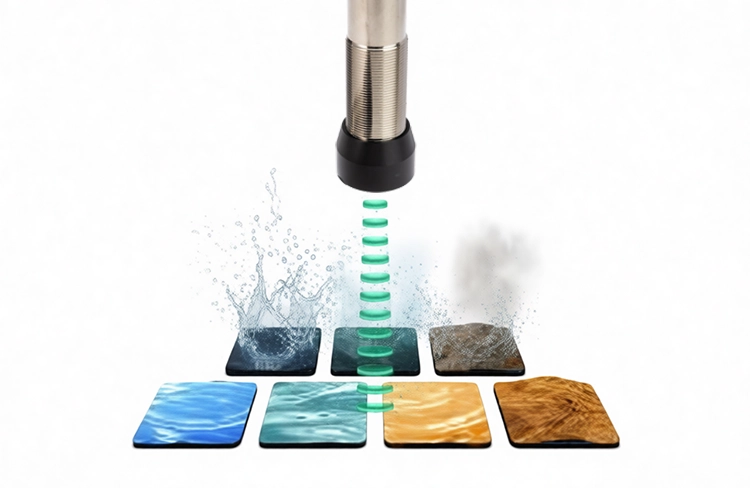
Unlike float level switches, ultrasonic sensors have no moving parts. Unlike pressure level transmitters, they do not need to be installed at the bottom of the tank or contact the medium directly. As a result, a non-contact level sensor can help reduce maintenance requirements, simplify installation, and improve measurement reliability in many industrial applications.
However, ultrasonic level measurement also depends on proper installation and application conditions. Factors such as foam, steam, strong turbulence, condensation, tank obstacles, and incorrect mounting position may affect echo quality. Therefore, when selecting an ultrasonic liquid level sensor, it is important to consider the measuring range, blind zone, output signal, liquid type, and tank environment.
3. Key Factors When Choosing an Ultrasonic Liquid Level Sensor
Choosing the right ultrasonic liquid level sensor is not only about selecting a sensor with the correct measuring range. In real industrial applications, the performance of an ultrasonic level sensor is also affected by the tank size, blind zone, output signal, liquid type, installation environment, temperature changes, and required accuracy.
Before selecting a sensor, it is important to understand the actual working conditions of the tank and the control system. The following factors can help engineers, equipment manufacturers, and system integrators choose a suitable sensor for stable and reliable ultrasonic level measurement.
3.1 Choose the Right Measuring Range
The measuring range is one of the first factors to consider when selecting an ultrasonic liquid level sensor. The sensor range must cover the full level variation inside the tank, from the lowest liquid level to the highest liquid level.
However, choosing the right range does not simply mean matching the sensor range to the tank height. You also need to consider the sensor mounting position, installation distance, and blind zone. For example, if the tank height is 3 meters, the sensor may need to be mounted slightly above the tank top, and the usable measuring distance may be reduced by the blind zone near the sensor face.
For small water tanks or compact equipment, a short-range sensor such as a 2m ultrasonic level sensor may be enough. For medium industrial tanks, a 3m ultrasonic level sensor أو 4m ultrasonic level sensor is often more suitable. For larger tanks or applications with a higher mounting position, a 6m ultrasonic level sensor or other long-range ultrasonic level sensor may be required.
When choosing the measuring range, it is better to leave a reasonable margin instead of selecting a sensor that only barely covers the maximum distance. This helps improve measurement stability and reduces the risk of signal loss under changing surface conditions.
Selection tips:
- For small tanks, choose a compact short-range ultrasonic level sensor.
- For medium tanks, consider 3m or 4m ultrasonic level sensors.
- For large tanks or high mounting positions, choose a 6m or long-range ultrasonic level sensor.
- Always check both the measuring range and the blind zone before installation.
- Avoid selecting a sensor only based on tank height.
3.2 Check the Blind Zone
Every ultrasonic sensor has a blind zone, also called a dead zone. This is the area directly in front of the sensor where the device cannot reliably detect the liquid surface. If the liquid level rises into this blind zone, the sensor may produce unstable readings, incorrect output, or no valid measurement.
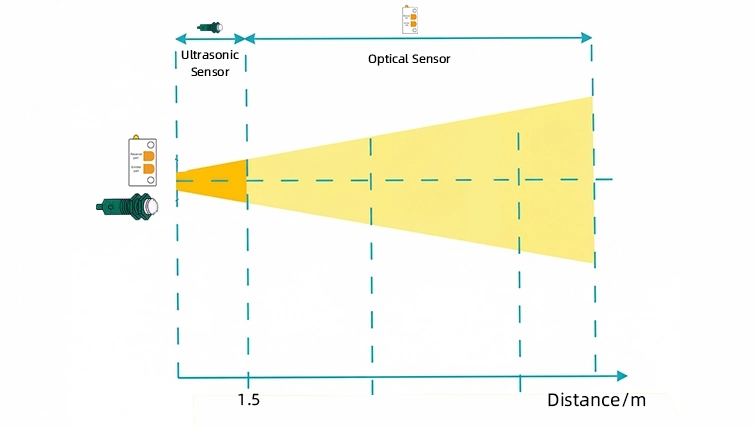
The blind zone exists because the ultrasonic transducer needs a short recovery time after emitting a sound pulse before it can receive the returning echo. The size of the blind zone depends on the sensor structure, frequency, measuring range, and signal processing design. In many applications, a shorter-range or higher-frequency sensor may have a smaller blind zone, but the exact value should always be checked according to the product specifications.
When installing an ultrasonic level sensor, the highest liquid level must remain outside the blind zone. For example, if the sensor has a blind zone of 200 mm, the maximum liquid surface should stay at least 200 mm away from the sensor face. In practice, it is often better to reserve additional safety distance to ensure stable measurement.
Ignoring the blind zone is one of the most common mistakes in ultrasonic level sensor selection. A sensor may have enough total range on paper, but if the blind zone is not considered, the usable measuring range may be smaller than expected.
Selection tips:
- Confirm the blind zone before choosing the sensor.
- Keep the maximum liquid level below the blind zone.
- Reserve enough installation distance between the sensor face and the highest liquid surface.
- For compact tanks, choose a small blind zone ultrasonic sensor.
- Avoid installing the sensor too close to the maximum liquid level.
3.3 Select the Proper Output Signal
The output signal determines how the ultrasonic level sensor communicates with a PLC, controller, display, alarm system, or OEM equipment. Choosing the wrong output type can cause integration problems, unstable control, or extra wiring costs.
For industrial tank level measurement, the most common output types include 4-20mA, 0-10V, PNP/NPN switching output, RS232, TTL232, and digital output.
A 4-20mA ultrasonic level transmitter is widely used in industrial automation because it is suitable for long-distance signal transmission and has strong anti-interference capability. It is commonly used with PLCs, process controllers, and monitoring systems.
A 0-10V ultrasonic level sensor is suitable for shorter-distance analog signal transmission. It is often used in equipment where the controller supports voltage input and the wiring distance is not very long.
A PNP or NPN switching output ultrasonic level sensor is more suitable for high-level or low-level alarm control. Instead of providing continuous level data, it gives a switching signal when the liquid reaches a set point. This is useful for overflow prevention, pump control, and empty-tank detection.
For equipment integration and OEM applications, RS232, TTL232, or digital output ultrasonic sensors may be a better choice. These outputs allow the sensor to transmit digital data directly to a control board, embedded system, or intelligent device.
Some all-in-one ultrasonic level sensors support multiple output options, such as analog output, switching output, and digital communication. This type is useful for machine builders and system integrators who need flexible configuration for different projects.
Selection tips:
- Choose 4-20mA for PLC systems and long-distance industrial signal transmission.
- Choose 0-10V for short-distance analog signal acquisition.
- Choose PNP/NPN switching output for high/low level alarm or pump control.
- Choose RS232 or TTL232 for OEM equipment and embedded systems.
- Choose multi-output sensors if your application requires flexible configuration.
3.4 Consider the Liquid Type
Different liquids and materials can affect ultrasonic level measurement in different ways. Before choosing an ultrasonic level sensor, it is important to understand what medium will be measured.
For clean water or ordinary liquid storage tanks, a standard ultrasonic water level sensor is usually sufficient. These applications typically have a relatively stable liquid surface and low risk of corrosion or contamination.
For chemical tanks or corrosive liquids, a standard sensor may not be suitable. In these applications, it is better to choose an anti-corrosion ultrasonic level sensor with corrosion-resistant materials or a protected sensing surface. This helps extend service life and improve long-term reliability.
For slurry, thick liquid, feed liquid, or wet-dry feeder applications, the liquid surface may be uneven, sticky, or contaminated. The sensor should have stable signal processing, reliable echo detection, and good resistance to harsh working conditions. A short-range anti-corrosion level sensor can be a suitable option for wet or contaminated environments.
For liquids with foam, steam, strong turbulence, or heavy condensation, ultrasonic measurement should be evaluated more carefully. Foam can absorb or scatter ultrasonic waves, while steam and temperature changes may affect sound transmission. In these cases, proper installation position, signal filtering, and temperature compensation are especially important.
Selection tips:
- For clean water tanks, use a standard ultrasonic water level sensor.
- For chemical tanks, choose an anti-corrosion ultrasonic level sensor.
- For slurry or wet-dry feeders, select a sensor with stable signal processing and corrosion resistance.
- For foam, steam, or turbulent surfaces, evaluate the application carefully before selection.
- Avoid using a standard sensor in corrosive or contaminated environments.
3.5 Evaluate the Installation Environment
The installation environment has a direct impact on the performance and service life of an ultrasonic level sensor. Even if the sensor specifications are correct, poor installation can still cause unstable readings or false signals.
First, consider whether the sensor will be installed indoors or outdoors. For outdoor tanks, the sensor may be exposed to rain, dust, sunlight, temperature changes, and humidity. In this case, a waterproof ultrasonic level sensor with an appropriate protection rating, such as IP67 or IP68, is recommended.
Second, check whether there is dust, vapor, condensation, or corrosive gas inside the tank. These factors can affect the ultrasonic echo or damage the sensor over time. For harsh environments, a corrosion-resistant or sealed sensor structure is more suitable.
Third, pay attention to the mounting position. The sensor should be installed vertically above the liquid surface whenever possible. It should not be too close to the tank wall, inlet, agitator, ladder, pipe, or other internal obstacles. These objects may reflect ultrasonic waves and cause false echoes.
If multiple ultrasonic sensors are installed close to each other, there may be a risk of crosstalk. Crosstalk occurs when one sensor receives the ultrasonic signal from another sensor. To reduce this problem, sensors should be properly spaced, synchronized, or selected with suitable anti-interference capability.
Selection tips:
- Use IP67 أو IP68 ultrasonic level sensors for wet or outdoor environments.
- Avoid installing the sensor near tank walls, inlets, mixers, or internal obstacles.
- Install the sensor vertically toward the liquid surface.
- Consider corrosion-resistant options for chemical vapor or corrosive gas.
- Check sensor spacing when multiple ultrasonic sensors are used nearby.
3.6 Consider Accuracy, Resolution and Temperature Compensation
For industrial level measurement, maximum range is not the only important specification. Accuracy, resolution, repeatability, and signal stability are also critical, especially when the level data is used for process control, inventory monitoring, or automatic equipment operation.
A high accuracy ultrasonic level sensor can provide more reliable measurement results, while a high resolution ultrasonic level sensor can detect smaller level changes. This is especially useful in small tanks, dosing systems, feed systems, or applications where precise liquid level control is required.
Temperature compensation is another important feature. Ultrasonic sensors calculate distance based on the speed of sound, and the speed of sound changes with temperature. Without temperature compensation, measurement accuracy may be affected when the ambient temperature changes. For outdoor tanks, chemical tanks, or industrial environments with large temperature variation, an ultrasonic sensor with built-in temperature compensation is recommended.
Advanced signal processing features such as adaptive gain, echo filtering, and noise suppression can also help improve measurement stability. These functions allow the sensor to adapt to different surface conditions and reduce the effect of interference from tank structures, weak echoes, or environmental noise.
Selection tips:
- Check accuracy and resolution, not only the measuring range.
- Use temperature compensation for environments with temperature changes.
- Choose stable signal processing for slurry, uneven surfaces, or industrial tanks.
- Consider repeatability if the sensor is used for automatic control.
- For demanding applications, choose sensors with adaptive gain or filtering functions.
4. Recommended Ultrasonic Level Sensor Types by Application
Different tanks and working environments require different ultrasonic level sensor configurations. A small water tank, a large industrial storage tank, a chemical tank, and an OEM control system may all use ultrasonic technology, but the suitable measuring range, output signal, housing design, and protection level can be very different.
The following table gives a practical selection reference for common industrial applications.
| التطبيق | Recommended Sensor Type | Key Features |
|---|---|---|
| Small water tank | 2m full-integrated ultrasonic liquid level sensor | Compact size, non-contact measurement, suitable for short-range level detection |
| Medium industrial tank | 3m / 4m all-in-one ultrasonic level sensor | Analog, switching, and digital output options for flexible integration |
| Large tank or high mounting position | 6m ultrasonic level sensor | Long measuring range, continuous tank level measurement |
| Chemical tank | Anti-corrosion ultrasonic level sensor | Corrosion-resistant design, suitable for harsh liquid environments |
| Slurry or wet-dry feeder | Short-range anti-corrosion level sensor | Stable detection in wet, sticky, or contaminated environments |
| PLC tank monitoring | 4-20mA ultrasonic level transmitter | Industrial analog output, suitable for PLC and long-distance signal transmission |
| OEM equipment integration | Digital output ultrasonic sensor | RS232 / TTL232 communication for embedded systems and intelligent equipment |
Small Water Tanks
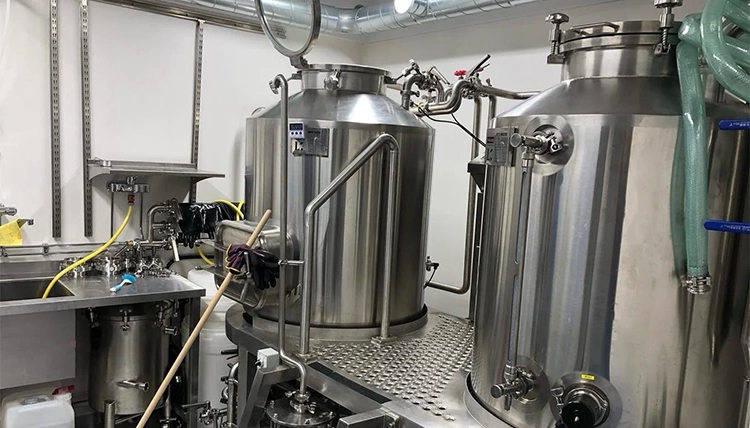
For small water tanks, compact equipment, or short-range liquid level monitoring, a 2m full-integrated ultrasonic liquid level sensor is usually a practical choice. It provides non-contact measurement without requiring the sensor to touch the liquid surface.
This type of compact ultrasonic level sensor is suitable for applications where installation space is limited, such as small process tanks, water storage containers, auxiliary tanks, and equipment-level monitoring systems. Compared with float switches, it has no moving parts and can provide continuous level data instead of only high/low level signals.
تشمل التطبيقات النموذجية ما يلي:
- Small water tanks
- Equipment water reservoirs
- Auxiliary liquid tanks
- Compact industrial containers
- Short-distance tank level measurement
Medium Industrial Tanks
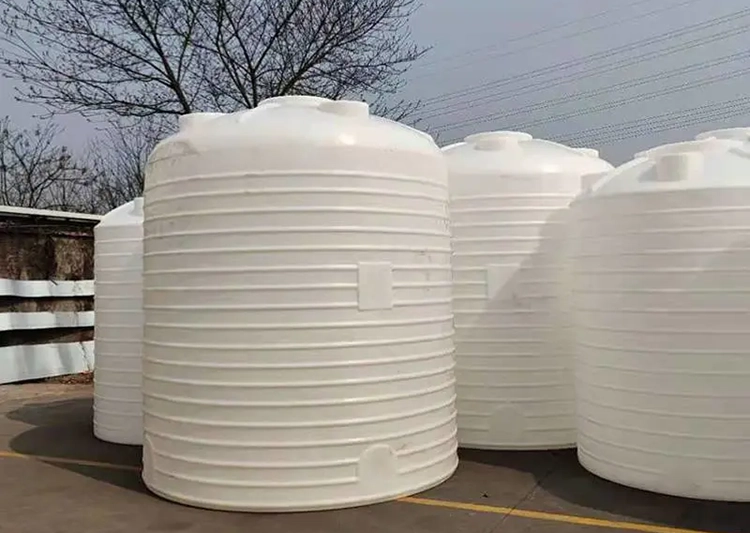
For medium-sized tanks, a 3m أو 4m all-in-one ultrasonic level sensor is often more suitable. These sensors can cover a wider measuring range and are commonly used in industrial tank level monitoring, process equipment, storage containers, and automation systems.
An all-in-one ultrasonic level sensor is especially useful when the system requires flexible output options. Depending on the controller or PLC, the sensor can provide analog output, switching output, or digital signal output. This makes it easier for equipment manufacturers and system integrators to use the same sensor platform across different projects.
تشمل التطبيقات النموذجية ما يلي:
- Industrial water tanks
- Process liquid tanks
- Medium storage tanks
- Machine-mounted liquid containers
- Automatic filling or draining systems
For medium tank applications, engineers should check the measuring range, blind zone, installation height, output signal, and protection rating before selection.
Large Tanks or High Mounting Positions
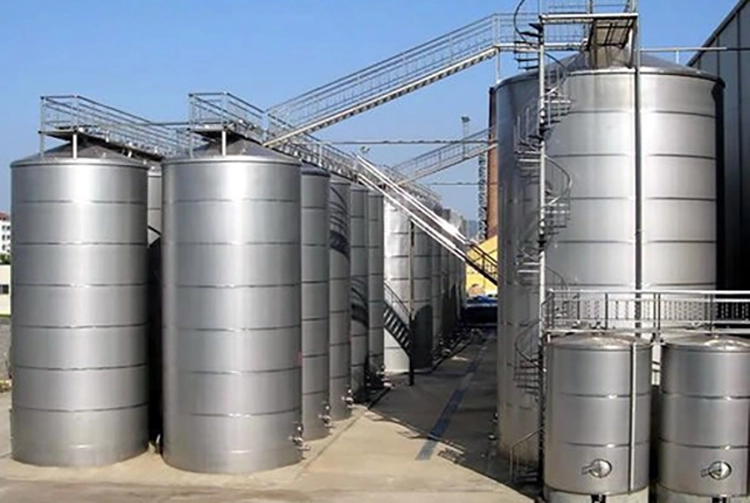
For larger tanks or applications where the sensor must be installed at a higher position, a 6m ultrasonic level sensor or other long-range ultrasonic level sensor is recommended. This type of sensor is designed for continuous level measurement over a longer distance.
A long-range sensor is useful when the tank height is large, the liquid level changes over a wide range, or the sensor cannot be mounted close to the liquid surface. However, when choosing a long-range ultrasonic level sensor, it is important to consider echo strength, beam angle, blind zone, and tank structure.
تشمل التطبيقات النموذجية ما يلي:
- Large industrial storage tanks
- High-position tank installations
- Water treatment tanks
- Chemical storage tanks
- Bulk liquid storage systems
For large tanks, the installation position is very important. The sensor should be mounted vertically toward the liquid surface and away from tank walls, ladders, pipes, mixers, or inlet flows that may cause false echoes.
Chemical Tanks
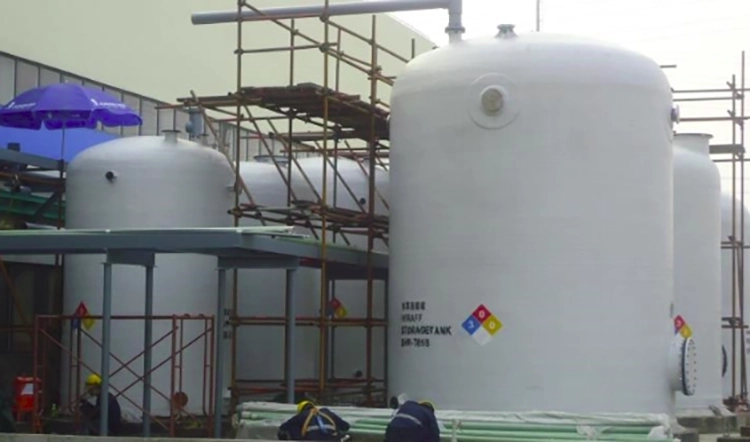
For chemical tanks or corrosive liquids, a standard ultrasonic level sensor may not provide sufficient long-term reliability. In these applications, an anti-corrosion ultrasonic level sensor or corrosion resistant ultrasonic level sensor should be selected.
Because ultrasonic measurement is non-contact, the sensor does not need to be immersed in the liquid. This already helps reduce corrosion risk. However, chemical vapor, splashing, condensation, and corrosive gas may still affect the sensor surface and housing. Therefore, the sensor material and sealing structure are important.
تشمل التطبيقات النموذجية ما يلي:
- Chemical storage tanks
- Acid or alkaline liquid tanks
- Corrosive process liquids
- Industrial dosing tanks
- Chemical treatment systems
For chemical tanks, engineers should confirm the liquid type, vapor condition, temperature, tank pressure, and installation environment before choosing the sensor.
Slurry or Wet-Dry Feeders
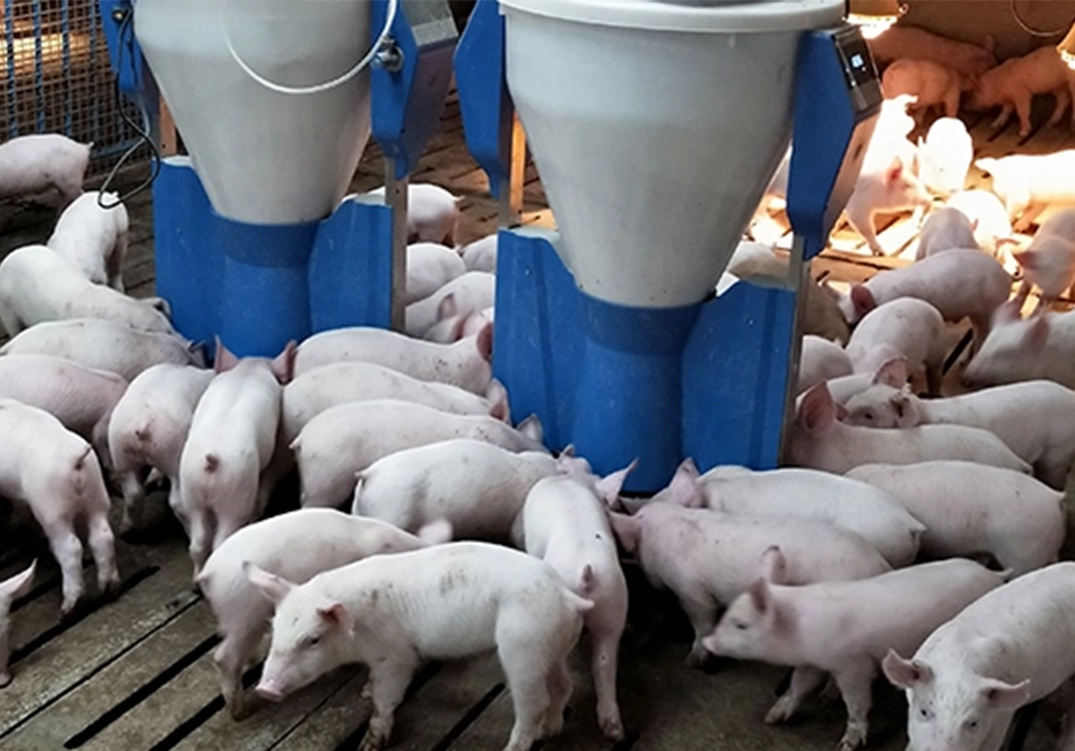
For slurry, feed liquid, sticky materials, or wet-dry feeder applications, the liquid surface may not be as stable as clean water. There may be foam, splashing, uneven surfaces, residue, or contamination inside the container. In these cases, a short-range anti-corrosion ultrasonic level sensor with stable signal processing is often a better option.
For example, a short-range sensor such as a 450mm anti-corrosion RS232 output ultrasonic level sensor can be suitable for compact wet-dry feeders or corrosive tank environments where close-range and reliable detection is required.
تشمل التطبيقات النموذجية ما يلي:
- Wet-dry feeders
- Slurry tanks
- Feed liquid containers
- Sticky or contaminated liquid surfaces
- Compact corrosive tanks
In these applications, the sensor should have reliable echo detection, suitable corrosion resistance, and stable output under changing surface conditions.
In general, the best ultrasonic level sensor type depends on the actual application. For a small clean water tank, a compact 2m sensor may be enough. For medium or large industrial tanks, 3m, 4m, or 6m sensors with analog output may be more suitable. For chemical liquids, slurry, or wet-dry feeders, anti-corrosion design and stable signal processing should be prioritized. For PLC or OEM systems, the output signal should be selected according to the controller requirements.
5. Ultrasonic Level Sensor vs Other Level Measurement Technologies
An ultrasonic level sensor is only one of several technologies used for industrial liquid level measurement. Depending on the tank structure, liquid type, accuracy requirement, and budget, engineers may also consider float level sensors, pressure level transmitters, capacitive level sensors, or radar level sensors.
Each technology has its own advantages and limitations. The best choice depends on the actual application, not only the sensor price.
Ultrasonic Level Sensor vs Float Level Sensor
A float level sensor is a traditional contact-type device. It uses a floating element that moves up and down with the liquid level. Float switches are simple, low-cost, and easy to use for basic high-level or low-level detection.
However, because the float must contact the liquid directly, it may be affected by contamination, sticking, corrosion, or mechanical wear. In liquids with impurities, slurry, sticky materials, or chemical media, the float may become blocked or damaged over time.
An ultrasonic liquid level sensor, on the other hand, is a non-contact level sensor. It is mounted above the tank and does not touch the liquid surface. This helps reduce mechanical wear and maintenance requirements. It can also provide continuous level measurement instead of only a switching signal.
For simple on/off level detection in clean liquids, a float sensor may be enough. But for continuous tank level measurement, corrosive liquids, or applications where maintenance reduction is important, ultrasonic technology is often a better option.
Ultrasonic Level Sensor vs Pressure Level Sensor
A pressure level sensor, also called a hydrostatic level sensor, measures liquid level by detecting the pressure generated by the liquid column. It is usually installed at the bottom or side of the tank and must be in direct contact with the liquid.
Pressure sensors can provide stable level measurement in many liquid applications, especially when the liquid density is known and relatively constant. They are also useful in tanks where top-mounted sensors are difficult to install.
However, pressure-based measurement can be affected by liquid density changes, sediment, clogging, corrosion, and installation conditions. Since the sensor is in contact with the medium, it may require more maintenance in dirty, corrosive, or crystallizing liquids.
An ultrasonic level sensor measures the distance from the top of the tank to the liquid surface. It does not require liquid contact, so it is easier to install and maintain in many open or atmospheric tanks. For water tanks, chemical tanks, and some slurry applications, ultrasonic sensors can provide a cleaner and more flexible non-contact level measurement solution.
Pressure sensors may be preferred for sealed tanks, high-pressure vessels, or applications with heavy foam on the surface. Ultrasonic sensors are often preferred for atmospheric tanks where non-contact measurement and easy maintenance are important.
Ultrasonic Level Sensor vs Capacitive Level Sensor
A capacitive level sensor detects level changes based on the change in capacitance between the sensor and the material. It can be used for liquids, powders, and granular materials, and is often applied in point level detection or continuous measurement depending on the design.
Capacitive sensors can work well in some compact tanks and material detection applications. However, they are usually affected by the dielectric constant of the medium. If the material properties change, the measurement may need recalibration. Coating, buildup, or sticky materials on the sensor probe may also affect accuracy.
By comparison, an ultrasonic level sensor measures the distance to the material surface using sound waves. It is not dependent on liquid color or transparency and does not need to be inserted into the medium. This makes ultrasonic sensors suitable for many water, chemical, slurry, powder, and granular material applications when the surface can reflect a stable echo.
Capacitive sensors may be a good choice for compact equipment or point level detection. Ultrasonic sensors are more suitable when a non-contact installation and continuous level data are required.
Ultrasonic Level Sensor vs Radar Level Sensor
Radar level sensors and ultrasonic level sensors are both non-contact technologies. The main difference is the signal type: ultrasonic sensors use high-frequency sound waves, while radar sensors use electromagnetic waves or microwaves.
Radar level sensors usually perform better in harsh environments with steam, dust, high temperature, pressure changes, or vapor. They are generally less affected by temperature and pressure changes than ultrasonic sensors, and they can provide reliable measurement in more demanding industrial conditions.
However, radar sensors are typically more expensive than ultrasonic sensors. For many standard applications such as water tanks, wastewater tanks, chemical storage tanks, and general industrial tank monitoring, an industrial ultrasonic level sensor can provide a cost-effective and reliable solution when installed correctly.
Ultrasonic sensors may be affected by heavy foam, strong steam, air turbulence, condensation, or complex tank structures. In these situations, radar may be considered if ultrasonic measurement cannot provide stable results. But for clean liquids, moderate chemical tanks, slurry tanks, and open atmospheric tanks, ultrasonic level measurement is often easier to apply and more economical.
Quick Comparison Table
| Technology | Measurement Type | Main Advantages | Limitations | Suitable Applications |
|---|---|---|---|---|
| Ultrasonic level sensor | Non-contact continuous measurement | No liquid contact, low maintenance, cost-effective, suitable for many tanks | Can be affected by foam, steam, turbulence, condensation, and obstacles | Water tanks, chemical tanks, wastewater, slurry, industrial tanks |
| Float level sensor | Contact point level or simple level detection | Low cost, simple structure | Moving parts, possible sticking, wear, corrosion, limited continuous data | Simple high/low level alarm in clean liquids |
| Pressure level sensor | Contact continuous measurement | Stable in many liquid tanks, suitable when top installation is difficult | Affected by density changes, sediment, clogging, corrosion | Bottom-mounted tank level measurement, sealed or deep tanks |
| Capacitive level sensor | Contact or non-contact depending on design | Suitable for liquids, powders, and granular materials | Affected by dielectric properties, buildup, and material changes | Compact tanks, point level detection, some solids applications |
| Radar level sensor | Non-contact continuous measurement | Strong performance in steam, dust, pressure, temperature variation | Higher cost, more complex selection | Harsh industrial tanks, high-value process applications |
In summary, the main ultrasonic level sensor advantages are non-contact measurement, simple installation, low maintenance, and good cost performance. It is especially suitable for applications where the sensor should not touch the liquid, such as water tanks, chemical tanks, slurry containers, and some bulk material storage systems.
However, if the application includes heavy foam, strong vapor, high pressure, high temperature, or very complex internal tank structures, other technologies such as radar or pressure measurement may be more suitable. For most standard industrial tanks, a properly selected and installed ultrasonic level sensor can provide stable, accurate, and economical level measurement.
6. Common Mistakes When Selecting an Ultrasonic Liquid Level Sensor
Even though an ultrasonic liquid level sensor is easy to install and widely used, incorrect selection or installation can still lead to unstable readings, false echoes, signal loss, or poor long-term reliability. Many problems are not caused by the sensor itself, but by choosing the wrong range, ignoring the blind zone, using an unsuitable output signal, or installing the sensor in a poor position.
Below are some common mistakes to avoid when selecting an ultrasonic level sensor for industrial tanks.
6.1 Only Checking Tank Height but Ignoring the Blind Zone
One of the most common mistakes is selecting a sensor only according to the tank height. For example, if the tank height is 2 meters, some users may simply choose a 2m ultrasonic level sensor without checking the blind zone.
However, every ultrasonic sensor has a blind zone, also called a dead zone. If the liquid surface rises too close to the sensor face, the sensor may not be able to detect the level correctly. This can cause unstable readings, incorrect output, or a blind zone alarm.
When selecting an ultrasonic level sensor, always calculate the usable measuring range:
Usable measuring range = Sensor measuring range – Blind zone
For high-level monitoring applications, make sure the maximum liquid level remains outside the blind zone. It is also recommended to leave some extra safety distance to improve measurement stability.
How to avoid this mistake:
- Check the sensor’s blind zone before selection.
- Do not allow the maximum liquid level to enter the dead zone.
- Reserve enough installation distance above the highest liquid level.
- For compact tanks, choose a small blind zone ultrasonic sensor.
6.2 Choosing the Wrong Output Signal for the PLC or Controller
Another common mistake is selecting an output signal that does not match the control system. Different applications require different output types, such as 4-20mA, 0-10V, PNP/NPN switching output, RS232, or TTL232.
For example, if the PLC only accepts 4-20mA analog input, a 0-10V sensor may require an additional signal converter. If the application only needs a high-level alarm, a continuous analog output may not be necessary. If the sensor is used in OEM equipment, a digital output such as RS232 or TTL232 may be more suitable.
Choosing the wrong output can increase wiring complexity, reduce signal stability, or cause integration problems.
How to avoid this mistake:
- Confirm the input type of the PLC, controller, or display.
- Choose 4-20mA for long-distance industrial signal transmission.
- Choose 0-10V for short-distance analog input systems.
- Choose PNP/NPN switching output for high/low level alarm.
- Choose RS232 / TTL232 for OEM equipment or embedded systems.
6.3 Installing the Sensor Too Close to the Tank Wall
An ultrasonic level sensor should be installed in a position where the sound wave can travel directly to the liquid surface and return clearly to the sensor. If the sensor is installed too close to the tank wall, pipe, ladder, inlet, agitator, or other internal structure, these objects may create false echoes.
False echoes can cause the sensor to detect the wrong distance, resulting in unstable or inaccurate level readings. This issue is especially common in narrow tanks or tanks with internal obstacles.
For best performance, the sensor should be mounted vertically above the liquid surface and away from the tank wall or any object that may reflect ultrasonic waves.
How to avoid this mistake:
- Install the sensor vertically toward the liquid surface.
- Keep enough distance from tank walls and internal structures.
- Avoid mounting near inlets, mixers, ladders, pipes, or baffles.
- Choose a suitable beam angle for the tank size.
- Test the echo stability after installation.
6.4 Ignoring Foam, Steam, Turbulence or Condensation
Ultrasonic level measurement depends on a clear echo from the liquid surface. Foam, steam, turbulence, heavy vapor, and condensation can weaken or disturb the ultrasonic signal. This may lead to false readings, unstable output, or signal loss.
For example, heavy foam can absorb or scatter ultrasonic waves. Strong steam may affect sound transmission. A turbulent liquid surface caused by filling, draining, or mixing can create unstable echoes. Condensation on the sensor face may also reduce measurement performance.
Ultrasonic sensors can work well in many industrial tanks, but these difficult conditions should be evaluated before selection.
How to avoid this mistake:
- Avoid installing the sensor directly above the filling inlet.
- Keep the sensor away from strong turbulence or splashing areas.
- Use signal filtering or stable averaging when the surface is unstable.
- Select sensors with temperature compensation and reliable echo processing.
- For heavy foam, strong steam, or high-pressure tanks, evaluate whether radar or another technology is more suitable.
6.5 Using a Standard Sensor in Corrosive Liquid Environments
For chemical tanks, corrosive liquids, or tanks with corrosive vapor, using a standard ultrasonic level sensor may shorten the service life of the sensor. Even though ultrasonic measurement is non-contact, the sensor face and housing may still be exposed to chemical vapor, splashing, or condensation.
In these applications, an anti-corrosion ultrasonic level sensor or corrosion resistant ultrasonic level sensor is recommended. The sensor material, sealing structure, cable, connector, and installation accessories should all be suitable for the chemical environment.
This is especially important for chemical tanks, wet-dry feeders, slurry containers, and corrosive process liquids.
How to avoid this mistake:
- Confirm the liquid type and chemical compatibility before selection.
- Use an anti-corrosion ultrasonic level sensor for chemical tanks.
- Consider corrosion-resistant housing or protected sensing surfaces.
- Check whether vapor, splashing, or condensation may contact the sensor.
- Avoid using ordinary sensors in harsh chemical environments.
6.6 Selecting a Sensor Without Temperature Compensation
Temperature affects the speed of sound in air. Since ultrasonic sensors calculate distance based on sound travel time, temperature changes can influence measurement accuracy. In outdoor tanks or industrial environments with large temperature variation, this effect may become more obvious.
A sensor without temperature compensation may still work in stable indoor environments, but it may produce larger errors when the temperature changes significantly. For accurate and stable ultrasonic level measurement, temperature compensation is an important feature.
How to avoid this mistake:
- Choose a sensor with built-in temperature compensation.
- Consider the operating temperature range of the application.
- Avoid placing the sensor near strong heat sources.
- For outdoor tanks, select a sensor suitable for changing environmental conditions.
- Check both accuracy and temperature compensation specifications.
6.7 Not Considering Electrical Noise and Cable Routing
In industrial automation systems, electrical noise from motors, pumps, inverters, solenoid valves, or high-power cables may affect sensor signals. Poor cable routing can cause unstable readings or abnormal output, especially for analog signals such as 0-10V.In industrial automation systems, electrical noise from motors, pumps, inverters, solenoid valves, or high-power cables may affect sensor signals. Poor cable routing can cause unstable readings or abnormal output, especially for analog signals such as 0-10V.
A 4-20mA ultrasonic level transmitter is usually more suitable for long-distance transmission and noisy industrial environments because it has stronger anti-interference capability. Proper grounding, shielding, and cable separation are also important.
How to avoid this mistake:
- Keep sensor cables away from high-power cables.
- Use shielded cables when necessary.
- Choose 4-20mA output for long-distance industrial wiring.
- Follow proper grounding and wiring practices.
- Avoid running sensor cables parallel to motor or inverter cables for long distances.
6.8 Selecting Based Only on Price
Choosing the lowest-cost sensor may seem attractive at the beginning, but it can lead to higher maintenance costs if the sensor is not suitable for the application. A sensor with the wrong range, weak protection rating, unsuitable output, or poor environmental resistance may cause repeated troubleshooting and downtime.
For industrial applications, the better approach is to select the sensor based on the actual working conditions, including tank height, liquid type, output signal, installation environment, accuracy requirements, and long-term reliability.
How to avoid this mistake:
- Select the sensor according to application requirements, not only price.
- Confirm range, blind zone, output, protection rating, and material.
- Consider long-term maintenance cost and system reliability.
- Ask the sensor manufacturer for selection support if the working condition is complex.
Summary: Mistakes to Avoid
| Common Mistake | Possible Result | Better Practice |
|---|---|---|
| Ignoring the blind zone | Unstable readings or no measurement near the sensor | Check blind zone and reserve installation distance |
| Wrong output signal | PLC or controller integration problems | Match output with the control system |
| Sensor too close to tank wall | False echoes and inaccurate level data | Mount vertically and avoid obstacles |
| Ignoring foam, steam, turbulence | Weak echo or false readings | Evaluate surface conditions before selection |
| Using standard sensor in corrosive tanks | Shorter sensor life or failure | Choose anti-corrosion sensor design |
| No temperature compensation | Accuracy changes with temperature | Use temperature-compensated sensors |
| Poor cable routing | Signal instability | Use proper wiring and shielding |
| Choosing only by price | Higher maintenance cost | Select based on application requirements |
By avoiding these common mistakes, users can improve measurement stability, reduce troubleshooting time, and extend the service life of the ultrasonic level sensor. For industrial tank applications, correct selection is just as important as the sensor itself.
7. Selection Checklist
Before choosing an ultrasonic liquid level sensor for an industrial tank, it is helpful to confirm the key application details in advance. A clear selection checklist can reduce communication time, avoid wrong model selection, and help the sensor manufacturer recommend a more suitable solution.
The following checklist can be used by engineers, purchasing teams, equipment manufacturers, and system integrators when selecting an ultrasonic level sensor.
7.1 Tank Height and Measuring Range
First, confirm the total tank height and the actual measuring distance required. The sensor range should cover the full level variation from the lowest liquid level to the highest liquid level.
Do not select the sensor only based on tank height. The installation height, sensor mounting position, and blind zone must also be considered.
Confirm before selection:
- What is the total tank height?
- What is the maximum measuring distance?
- What is the minimum measuring distance?
- Is the sensor mounted directly on the tank top or above the tank?
- Is a 2m, 3m, 4m, or 6m ultrasonic level sensor required?
7.2 Minimum and Maximum Liquid Level
The minimum and maximum liquid level determine the real working range of the sensor. In some applications, the tank may never be completely empty or completely full, so the actual measuring range may be smaller than the tank height.
The highest liquid level is especially important because it must not enter the sensor’s blind zone.
Confirm before selection:
- What is the lowest liquid level to be measured?
- What is the highest liquid level to be measured?
- Will the tank be filled close to the top?
- Is overflow prevention required?
- Is continuous level monitoring or only high/low level detection needed?
7.3 Required Blind Zone
Every ultrasonic sensor has a blind zone, also called a dead zone. The liquid surface should always remain outside this area. If the tank is very small or the maximum liquid level is close to the sensor, a small blind zone ultrasonic sensor may be required.
Confirm before selection:
- What blind zone can the installation allow?
- Is there enough distance between the sensor face and the highest liquid level?
- Does the application require short-range measurement?
- Is the tank height limited?
- Is a compact ultrasonic level sensor needed?
7.4 Liquid Type
The liquid type has a direct impact on sensor selection. Clean water, oil, chemical liquids, slurry, feed liquid, and wastewater may require different sensor designs.
For clean water tanks, a standard ultrasonic water level sensor is usually suitable. For chemical tanks or corrosive liquids, an anti-corrosion ultrasonic level sensor is recommended. For slurry or wet-dry feeder applications, stable signal processing and contamination resistance should be considered.
Confirm before selection:
- Is the medium water, oil, chemical liquid, slurry, wastewater, or feed liquid?
- Is the liquid corrosive?
- Is there foam, vapor, steam, or splashing?
- Is the liquid surface stable or turbulent?
- Is an anti-corrosion sensor required?
7.5 Output Signal
The sensor output must match the control system. Different applications may require analog output, switching output, or digital communication.
For PLC systems and long-distance industrial wiring, a 4-20mA ultrasonic level transmitter is often recommended. For short-distance analog input, 0-10V may be suitable. For alarm or pump control, PNP/NPN switching output can be used. For OEM equipment, RS232 / TTL232 digital output may be more convenient.
Confirm before selection:
- Does the controller require 4-20mA, 0-10V, PNP/NPN, RS232, or TTL232?
- Is continuous level data required?
- Is the sensor used for alarm control or process monitoring?
- What is the wiring distance?
- Is the sensor connected to a PLC, display, control board, or embedded system?
7.6 Installation Environment
The installation environment affects both measurement stability and sensor service life. Outdoor tanks, wet areas, corrosive environments, dusty locations, and tanks with internal obstacles require special attention.
Confirm before selection:
- Is the sensor installed indoors or outdoors?
- Is there rain, dust, humidity, condensation, or water spray?
- Is there corrosive gas or chemical vapor?
- Are there mixers, pipes, ladders, inlets, or obstacles inside the tank?
- Is there enough space to mount the sensor vertically?
- Are multiple ultrasonic sensors installed close to each other?
7.7 Accuracy and Resolution Requirement
For simple level monitoring, standard accuracy may be enough. For dosing systems, small tanks, process control, or inventory monitoring, higher accuracy and resolution may be required.
Temperature compensation is also important because temperature changes affect the speed of sound and may influence measurement accuracy.
Confirm before selection:
- What accuracy is required?
- What resolution is required?
- Is millimeter-level resolution needed?
- Does the application require repeatable measurement?
- Is temperature compensation required?
- Does the sensor need adaptive gain or signal filtering?
7.8 Power Supply and Controller Type
Before selecting the sensor, confirm the available power supply and the type of controller. Industrial sensors may use different supply voltages depending on the model and output type.
Confirm before selection:
- What power supply is available?
- Is the sensor powered by the PLC, control cabinet, or equipment board?
- Does the controller support analog input or digital communication?
- Is electrical isolation required?
- Are there special connector or cable requirements?
7.9 Protection Rating
For industrial tanks, the sensor may be exposed to water, dust, humidity, or outdoor conditions. The protection rating should match the installation environment.
For wet or outdoor applications, an IP67 ultrasonic level sensor or IP68 ultrasonic level sensor may be required. For chemical environments, both waterproof protection and corrosion resistance should be considered.
Confirm before selection:
- Is IP65, IP67, or IP68 protection required?
- Will the sensor be exposed to rain or water spray?
- Is the tank located outdoors?
- Is there condensation inside the tank?
- Does the cable or connector also need waterproof protection?
7.10 OEM or Customized Design Requirements
For equipment manufacturers and system integrators, standard sensors may not always meet all requirements. Some projects may require customized range, output, housing, cable length, connector type, or communication protocol.
If the sensor will be integrated into OEM equipment, it is better to discuss the technical requirements with the manufacturer in advance.
Confirm before selection:
- Is a standard model enough?
- Is OEM or ODM customization required?
- Is a special measuring range needed?
- Is a special output protocol required?
- Are there requirements for housing size, cable length, connector, or mounting thread?
- Is private labeling or batch customization needed?
Quick Selection Checklist
| Item to Confirm | Key Questions |
|---|---|
| Tank height and range | What is the tank height? What measuring range is required? |
| Liquid level range | What are the minimum and maximum liquid levels? |
| Blind zone | Is there enough distance above the highest liquid level? |
| Liquid type | Is it water, oil, chemical, slurry, wastewater, or feed liquid? |
| Output signal | Is 4-20mA, 0-10V, PNP/NPN, RS232, or TTL232 required? |
| Installation environment | Indoor or outdoor? Wet, dusty, corrosive, or clean? |
| Accuracy and resolution | What accuracy and resolution are needed? |
| تعويض درجة الحرارة | Will the temperature change during operation? |
| Power supply | What voltage and controller type are available? |
| Protection rating | Is IP65, IP67, or IP68 required? |
| Customization | Is OEM/ODM or custom design needed? |
A complete selection checklist makes it easier to choose the right ultrasonic liquid level sensor for the application. If you can provide the tank height, measuring range, liquid type, output signal, installation environment, and accuracy requirement, the sensor manufacturer can recommend a more accurate model and reduce the risk of installation problems.
8. خاتمة
Choosing the right ultrasonic liquid level sensor for an industrial tank requires more than simply checking the tank height. To achieve stable and accurate tank level measurement, engineers should consider the measuring range, blind zone, output signal, liquid type, installation environment, accuracy requirement, and long-term reliability.
For standard water tanks or general liquid storage applications, a compact or all-in-one ultrasonic level sensor can provide reliable non-contact measurement with easy installation and low maintenance. For medium and large industrial tanks, 3m, 4m, or 6m ultrasonic level sensors can be selected according to the tank height and mounting position.
For chemical tanks, slurry tanks, wet-dry feeders, or corrosive environments, an anti-corrosion ultrasonic level sensor is usually a better choice. These applications require not only non-contact measurement, but also suitable housing materials, stable signal processing, and resistance to vapor, splashing, or contamination.
For PLC-based tank monitoring systems, output signal selection is also important. A 4-20mA ultrasonic level transmitter is suitable for industrial PLCs and long-distance signal transmission, while 0-10V, PNP/NPN switching output, or RS232 / TTL232 digital output can be selected according to the controller or OEM equipment requirements.
In short, the best ultrasonic liquid level sensor should match the real working conditions of the tank. By confirming the range, blind zone, liquid type, output signal, installation environment, and accuracy requirement before selection, users can reduce false readings, avoid installation problems, and improve long-term system performance.
Need help choosing an ultrasonic liquid level sensor for your tank? Contact مستشعر ISSRSRS with your tank height, liquid type, installation environment, and output requirements. Our engineers will recommend a suitable model for your application.
الأسئلة الشائعة
Q1: How do I choose the right measuring range for an ultrasonic liquid level sensor?
A1: To choose the right measuring range, you should confirm the tank height, sensor mounting position, minimum liquid level, maximum liquid level, and blind zone. The sensor range should cover the full liquid level change, but it should not be selected only according to tank height.
For small tanks, a 2m ultrasonic level sensor may be enough. For medium or large industrial tanks, 3m, 4m, or 6m ultrasonic level sensors may be more suitable. It is also recommended to leave some extra range margin to improve measurement stability.
Q2: What is the blind zone of an ultrasonic level sensor?
A2: The blind zone, also called the dead zone, is the area close to the sensor face where the ultrasonic sensor cannot measure reliably. If the liquid level enters this area, the sensor may give unstable readings, false readings, or no valid output.
When installing an ultrasonic liquid level sensor, the highest liquid level must remain outside the blind zone. Many sensor troubleshooting problems are related to ignoring the blind zone during selection or installation[ref:1,2].
Q3: Can ultrasonic level sensors measure chemical liquids?
A3: Yes. Ultrasonic level sensors can measure many chemical liquids because they use non-contact level measurement and do not need to touch the liquid directly. However, chemical vapor, splashing, condensation, or corrosive gas may still affect the sensor face and housing.
For chemical tanks or corrosive liquids, it is better to choose an anti-corrosion ultrasonic level sensor أو corrosion resistant ultrasonic level sensor with suitable housing material and sealing design.
Q4: Which output signal should I choose: 4-20mA, 0-10V, PNP/NPN, or RS232?
A4: The output signal should match your controller or automation system.
- 4-20mA is recommended for industrial PLC systems and long-distance transmission.
- 0-10V is suitable for short-distance analog signal input.
- PNP/NPN switching output is suitable for high/low level alarm or pump control.
- RS232 / TTL232 digital output is suitable for OEM equipment, embedded systems, and intelligent devices.
If your project needs flexible integration, a multi-output or all-in-one ultrasonic level sensor may be a better choice.
Q5: Can ultrasonic liquid level sensors work with foam, steam, or turbulent liquid surfaces?
A5: Ultrasonic sensors can work in many industrial tanks, but heavy foam, strong steam, vapor, turbulence, and condensation may weaken or scatter the ultrasonic echo. This can cause unstable readings or signal loss[ref:1,4,6].
For these conditions, the sensor should be installed away from filling inlets, mixers, and splashing areas. It is also helpful to choose a sensor with stable echo processing, filtering, adaptive gain, and temperature compensation. If foam or steam is very heavy, radar level measurement may need to be considered.
Q6: How should an ultrasonic level sensor be installed on a tank?
A6: The sensor should be installed vertically above the liquid surface and pointed directly toward the liquid. It should not be installed too close to the tank wall, inlet, ladder, pipe, agitator, or other internal obstacles, because these objects may create false echoes.
The installation should also keep enough distance between the sensor face and the highest liquid level to avoid the blind zone. For outdoor or wet environments, choose a waterproof ultrasonic level sensor with a suitable protection rating such as IP67 أو IP68.
Q7: Why does an ultrasonic level sensor show false readings or unstable output?
A7: False readings or unstable output are usually caused by one or more of the following reasons:
- Liquid level entering the blind zone
- Sensor installed too close to the tank wall or obstacles
- Foam, steam, turbulence, or condensation
- Wrong output signal or wiring problem
- Electrical noise from motors, pumps, or inverters
- Standard sensor used in corrosive environments
- No temperature compensation in changing temperature conditions
Checking installation position, blind zone, liquid surface condition, wiring, and sensor specifications can solve many ultrasonic level sensor troubleshooting problems.
Q8: Is an ultrasonic level sensor better than a float level sensor?
A8: An ultrasonic level sensor is often better when non-contact, continuous level measurement is required. It has no moving parts and does not need to touch the liquid, so it can reduce problems caused by sticking, corrosion, contamination, and mechanical wear.
A float level sensor is simple and low-cost, but it is usually more suitable for basic high/low level detection in clean liquids. For industrial tank level measurement, chemical tanks, slurry tanks, or applications requiring continuous data, ultrasonic level sensors are often more suitable.
Q9: Can ultrasonic level sensors be used for slurry or wet-dry feeders?
A9: Yes, ultrasonic level sensors can be used for some slurry, feed liquid, wet-dry feeder, or contaminated liquid applications. However, the liquid surface may be uneven, sticky, or unstable, so the sensor should have stable signal processing and good environmental resistance.
For wet-dry feeders or corrosive compact tanks, a short-range anti-corrosion ultrasonic level sensor with digital output such as RS232 can be a practical option.
Q10: Do ultrasonic level sensors need temperature compensation?
A10: Yes, temperature compensation is recommended for accurate and stable ultrasonic level measurement. Ultrasonic sensors calculate distance based on sound travel time, and the speed of sound changes with temperature.
In outdoor tanks or industrial environments with large temperature variation, a sensor without temperature compensation may produce larger measurement errors. For better performance, choose a sensor with built-in temperature compensation, stable filtering, and reliable echo processing.
-

مستشعر المستوى بالموجات فوق الصوتية الكل في واحد ISSRSensor 3M الكل في واحد | تناظري/التبديل/رقمي
-

مستشعر المستوى بالموجات فوق الصوتية ISSRSensor مقاس 450 مم المضاد للتآكل RS232 الناتج بالموجات فوق الصوتية للمغذيات الرطبة الجافة والخزانات المسببة للتآكل
-
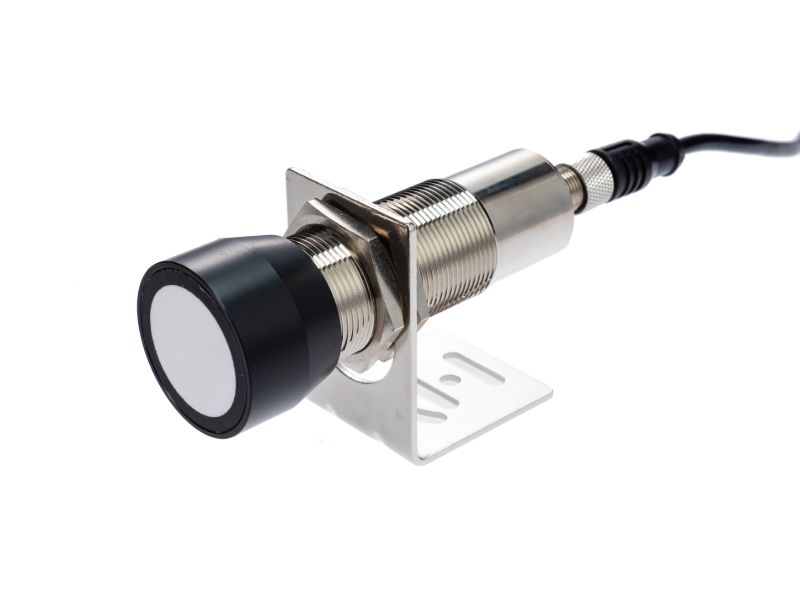
جهاز استشعار المسافة بالموجات فوق الصوتية ISSRSensor 4M الكل في واحد مستشعر المسافة بالموجات فوق الصوتية/مخرج تناظري/رقمي
-
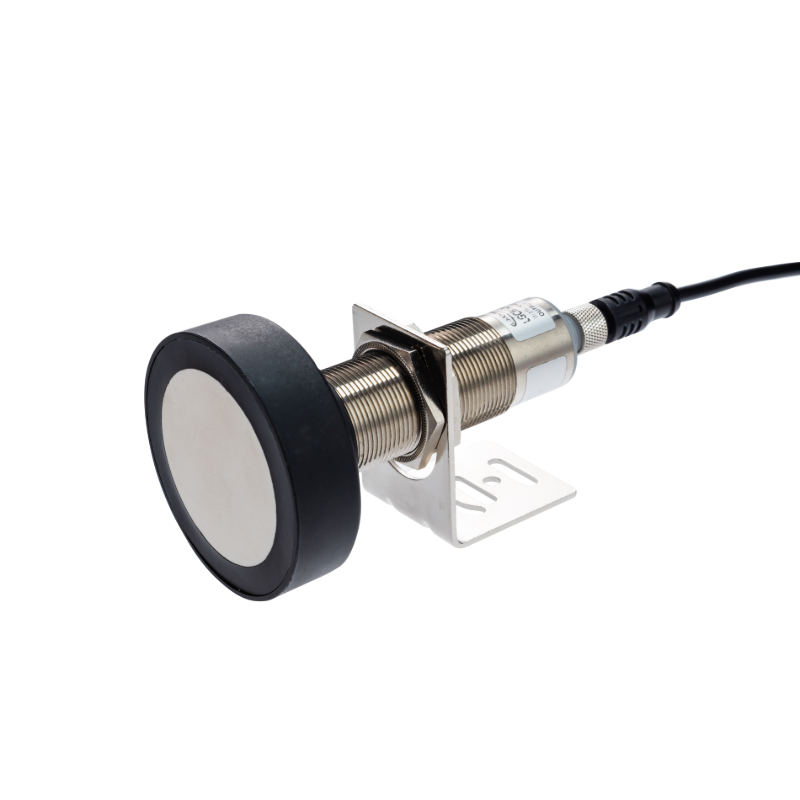
مستشعر المستوى بالموجات فوق الصوتية ISSRSensor 6M بالموجات فوق الصوتية |مستشعر مستوى الموجات فوق الصوتية متعدد المخرجات التناظرية/التبديل/ الرقمية
-
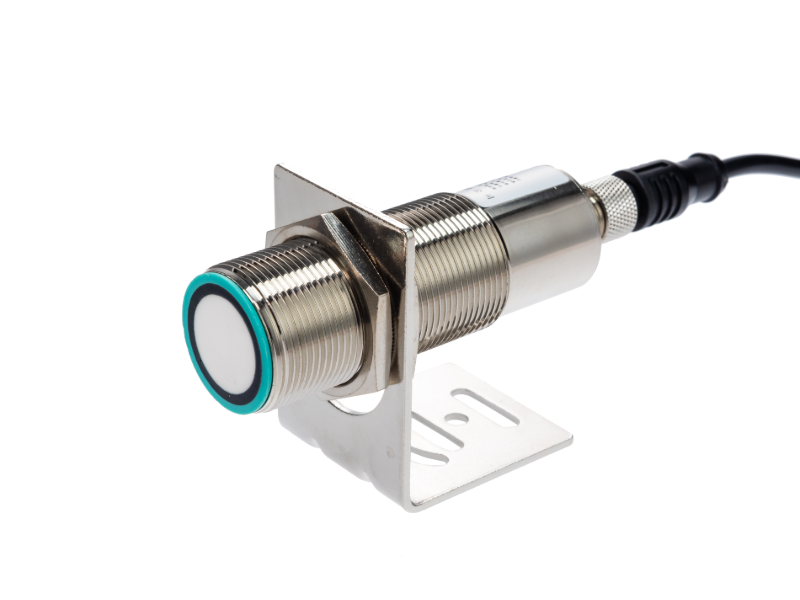
جهاز استشعار مستوى السائل بالموجات فوق الصوتية ISSRS Sensor 2M متكامل بالكامل
-
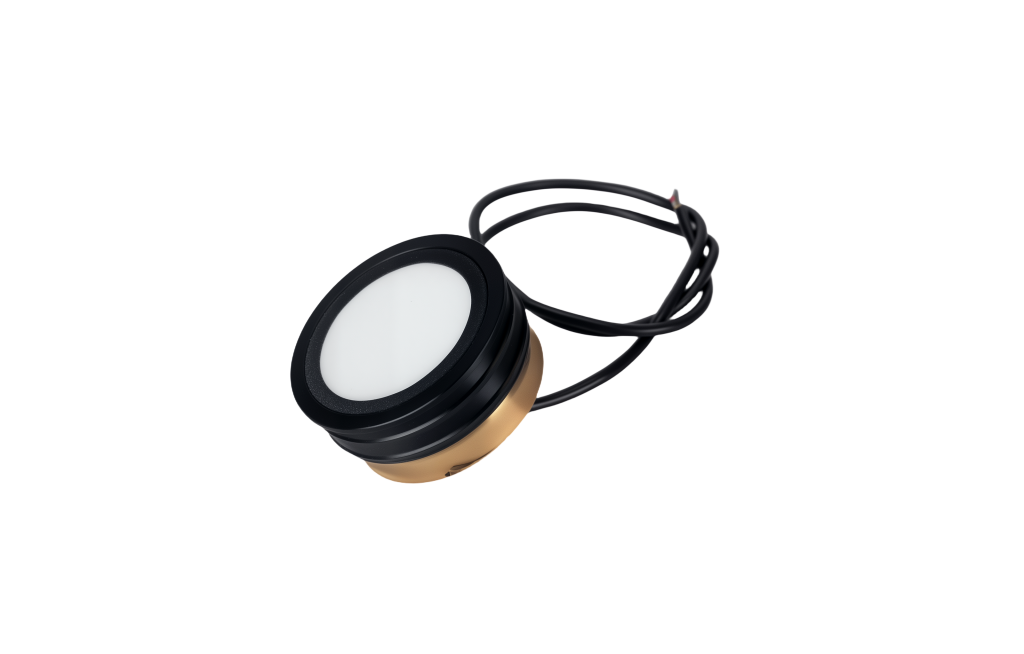
محول الطاقة بالموجات فوق الصوتية المقاوم للتآكل ISSRS Sensor 112 كيلو هرتز للكشف عن مستوى السائل/الصلب وتحديد المدى
-
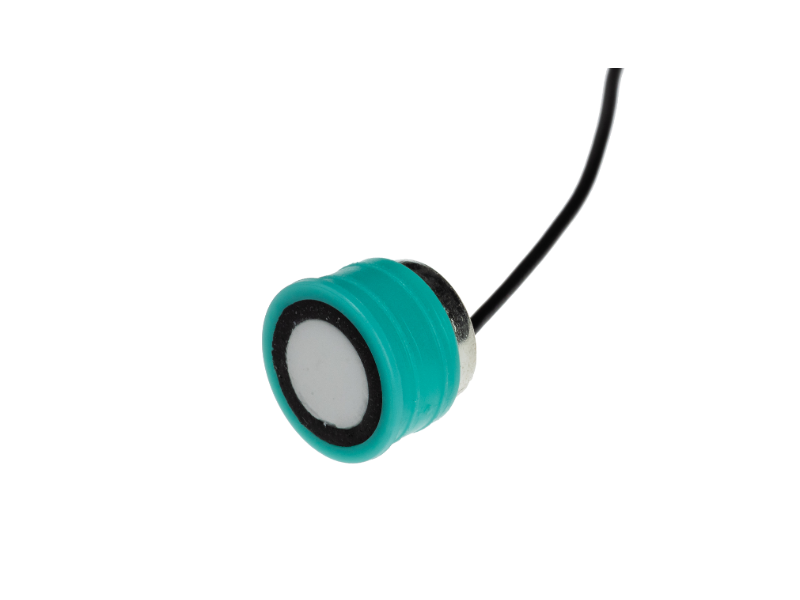
مستشعر ISSRSensor 200 كيلو هرتز مستشعر محول طاقة عالي الحساسية بالموجات فوق الصوتية للكشف عن الصفيحة المزدوجة والمسافة