










Introdução
No campo da automação industrial, silos, tanques de armazenamento, linhas de transporte, equipamento de embalagem e sistemas de tratamento de água requerem um controlo preciso de uma informação essencial: onde está o material neste momento?
Os medidores de nível de líquido tradicionais ou medidores de nível de material são normalmente fornecidos com cabeçalhos de ecrã, definições de menu e funções de leitura locais; no entanto, o foco deste artigo é o nível inferior sensor ultrassónico do nível do depósito e dispositivos de alcance que são mais fáceis de integrar na automação. Normalmente, estes sensores não privilegiam a visualização no local, mas em vez disso emitem sinais centrais diretamente para PLCs, DCSs, gateways IO-Link ou controladores, tais como:
- Saída de comutação: PNP / NPN, utilizado para alarmes de nível alto, nível baixo, deteção de posição e anti-transbordamento;
- Saída analógica: 4-20mA / 0-10V, utilizado para a monitorização contínua da altura do nível de líquidos ou materiais;
- Saída de comunicação digital: RS485, Modbus, etc., utilizados para redes multiponto, aquisição remota de dados e integração de dispositivos inteligentes.
Do ponto de vista das aplicações de engenharia, os sensores ultra-sónicos não são, de forma alguma, produtos que “só podem medir água”. São amplamente aplicáveis a líquidos, sólidos, grânulos, pós e alguns alvos de superfície complexa. Atualmente, os principais fabricantes da indústria de sensores e instrumentos industriais aplicam claramente a tecnologia ultra-sónica a cenários de deteção de nível de líquidos, níveis de sólidos, grânulos, pós e alvos complexos.
No entanto, não são omnipotentes. O núcleo da estabilidade da medição ultra-sónica não depende da cor, transparência ou luminescência do material, mas sim de um fator mais fundamental: a capacidade de reflexão acústica da superfície do material e a estabilidade do meio de ar no local.
Princípio do alcance do núcleo: Porque é que a “caraterística acústica” do material determina a aplicabilidade?
O princípio básico de qualquer sensor ultrassónico de nível de tanque é o TOF (Time of Flight).
A sonda do sensor emite um feixe de ondas sonoras de alta frequência. As ondas sonoras propagam-se através do ar, reflectem-se ao encontrarem a superfície do material e os ecos são recebidos pela sonda. O circuito de controlo calcula a distância com base na diferença de tempo entre a emissão e a receção das ondas sonoras:
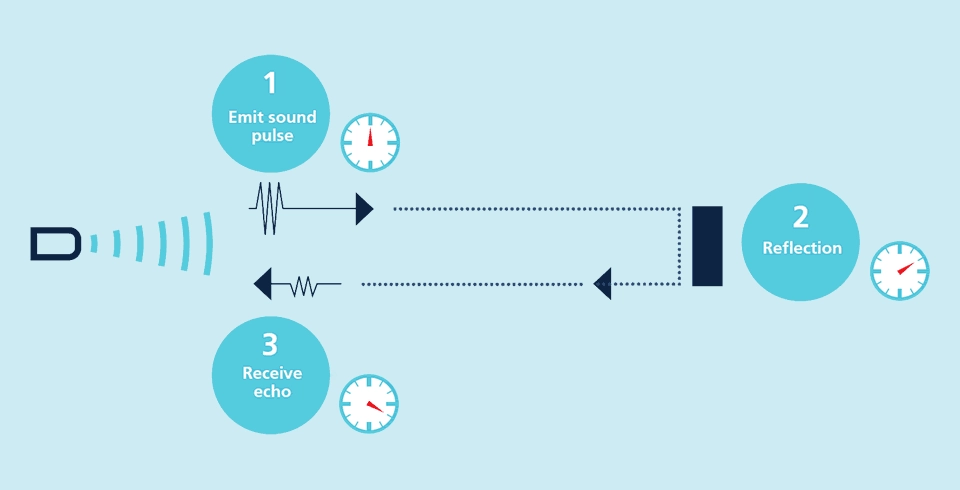
Se a altura total da instalação do silo ou do tanque de armazenamento for conhecida, o sistema pode ainda calcular a altura do nível do líquido, do nível do material ou do espaço restante.
A medição ultra-sónica centra-se na “reflexão acústica” e não na cor
Ao contrário dos sensores fotoeléctricos, sensores ultra-sónicos dependem principalmente da propagação de ondas sonoras e da receção de ecos. Por conseguinte, normalmente não são diretamente afectados pelos seguintes factores visuais ou ópticos:
- A tonalidade da cor do material;
- Se a superfície é transparente;
- Se a superfície é brilhante;
- A intensidade da luz ambiente;
- Se o alvo é refletor.
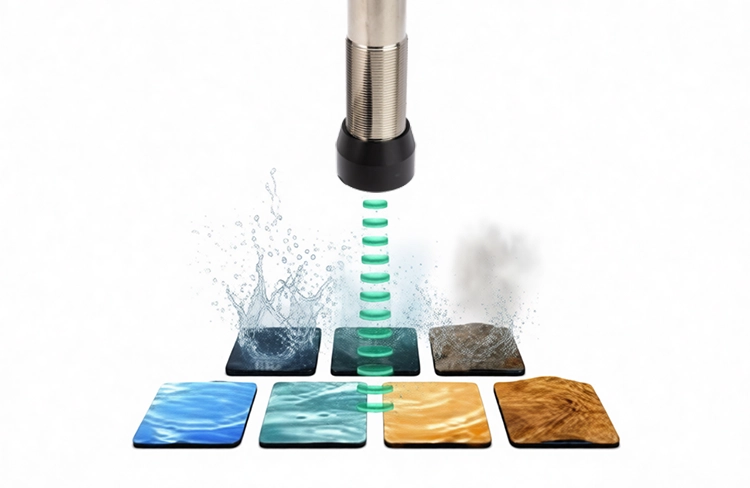
Por este motivo, os sensores ultra-sónicos podem ser amplamente utilizados para medir sólidos, líquidos, grânulos e pós, e estão completamente livres das limitações da cor, brilho e transparência do alvo. Os sensores de nível ultra-sónicos podem identificar com precisão objectos transparentes, escuros, de alto brilho ou estruturalmente complexos e, até certo ponto, podem penetrar na interferência do pó e do nevoeiro.
Principais factores que afectam a estabilidade da medição
Os principais factores que determinam verdadeiramente se um detetor de nível ultrassónico é adequado incluem:
- Se a superfície pode formar ecos efectivos: As superfícies planas, duras e densas são mais propensas a refletir as ondas sonoras;
- Se o material absorve o som: Os materiais macios como a esponja, a espuma e as fibras absorvem facilmente a energia acústica;
- Se a superfície flutua violentamente: A agitação do líquido, a agitação e o impacto do material fazem com que o sinal de eco salte;
- Se existe uma quantidade excessiva de espuma, pó ou vapor: Estes factores absorvem e dispersam as ondas sonoras ou alteram a velocidade do som;
- Se o ângulo de instalação está correto: A sonda deve estar tão perpendicular à superfície média do alvo quanto possível;
- Se o alcance, a zona cega e o ângulo do feixe coincidem: A lógica de seleção para distâncias curtas em tanques pequenos e espaços estreitos em silos grandes é completamente diferente.
Em suma, o sensor de nível ultrassónico mede “ecos”. Desde que o material possa emitir ecos estáveis e suficientemente fortes, pode normalmente fornecer resultados de medição altamente fiáveis.
Tipos de materiais mais adequados para sensores de nível ultra-sónicos
1. Vários Líquidos: Desde água limpa e águas residuais até certos líquidos químicos
Os líquidos são um dos alvos de aplicação mais comuns e tecnologicamente maduros para sensores de nível ultra-sónicos. Os líquidos adequados para medição incluem:
- Água limpa, água pura, água em circulação;
- Esgotos, águas residuais, águas pluviais;
- Líquido de arrefecimento, líquido de limpeza;
- Lama, líquido turvo, nível de líquido do tanque de decantação;
- Certos líquidos químicos;
- Óleos, óleos usados, fluidos de lubrificação;
- Níveis de líquido em tanques de armazenamento, cubas e tanques de água.
Um sensor ultrassónico de nível de reservatório não só pode ser utilizado para a deteção do nível de líquidos e sólidos, como também é adequado para a monitorização do fluxo em canal aberto, podendo adaptar-se bem a líquidos transparentes ou turvos, superfícies relativamente sujas e outros alvos complexos. Os seus cenários de aplicação típicos abrangem a monitorização do nível de líquidos industriais, tratamento de água, produtos químicos e reservatórios de petróleo.
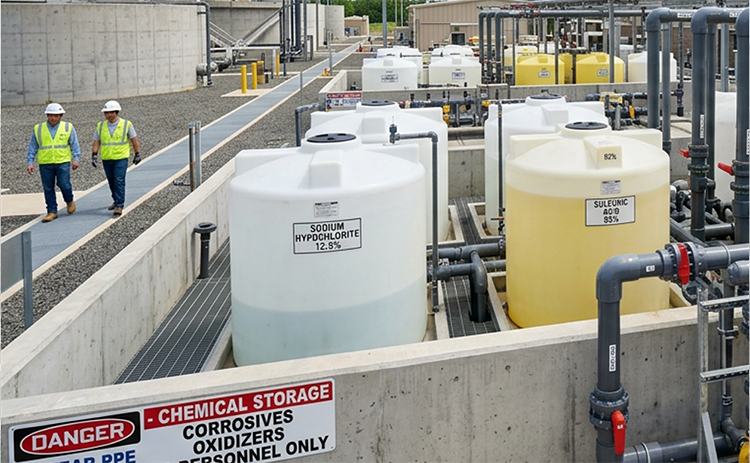
Porque é que os líquidos são geralmente mais adequados? As superfícies da maioria dos líquidos são relativamente planas e contínuas, o que pode formar uma interface de reflexão de ondas sonoras muito clara. Desde que a superfície do líquido não esteja em movimento violento e a espuma não seja espessa, os sensores ultra-sónicos podem normalmente obter uma medição de distância ou monitorização do nível de líquido altamente estável.
As aplicações típicas incluem:
- Monitorização do nível de líquidos em piscinas de tratamento de água;
- Alarmes de nível de líquido do poço de esgoto e do poço de recolha;
- Aquisição contínua do nível de líquidos em tanques de armazenamento de produtos químicos;
- Controlo do nível alto e baixo do depósito de água do equipamento;
- Deteção de abatimento do depósito de óleo e do depósito do líquido de refrigeração;
- Medição da altura de um canal aberto ou de uma calha aberta.
Condições líquidas a ter em conta: Embora os líquidos sejam extremamente adequados para a medição por ultra-sons, os seguintes riscos potenciais ainda têm de ser avaliados em aplicações reais:
- Se há espuma excessivamente espessa na superfície;
- Se existe uma agitação mecânica intensa no tanque;
- Se o ambiente está cheio de grandes quantidades de vapor a alta temperatura;
- Se a superfície da sonda é propensa à condensação e à acumulação de material;
- Se a superfície do líquido tem inclinação óbvia ou vórtices;
- Se existem interferências estruturais, tais como pás de agitação, escadas ou tubagens no interior do contentor.
Em geral, se se tratar apenas da medição sem contacto de água limpa normal, esgotos, óleo ou líquidos químicos, um sensor de nível ultrassónico é normalmente uma solução preferida muito económica e fácil de integrar.
2. Materiais sólidos duros normais: Metal, vidro, folhas de plástico, etc.
Para além dos líquidos, os sensores ultra-sónicos também são muito adequados para a deteção de alvos sólidos duros, regulares e relativamente planos. Os materiais típicos incluem:
- Placas de metal;
- Placas de vidro;
- Folhas de plástico duro;
- Tábuas de madeira;
- Pilhas de cartão;
- Paletes, caixas, peças de trabalho;
- Objectos planos de grandes dimensões;
- Bloquear materiais com superfícies planas.
É de salientar que os ultra-sons são mais adequados para a deteção de superfícies sólidas “grandes e planas”, enquanto que o seu desempenho de deteção em alvos macios ou irregulares não é o ideal. Esta caraterística é crucial na seleção industrial.
Porque é que as superfícies planas e duras funcionam bem? As superfícies planas e duras têm geralmente duas grandes vantagens acústicas:
- Forte reflexão sonora: O material da superfície é denso e não é suscetível de absorver a energia acústica;
- Direção de reflexão estável: Se o sensor for instalado verticalmente, o eco pode regressar à sonda ao longo do caminho original na maior extensão possível.
Por conseguinte, quando utilizados como sensores de distância ultra-sónicos para deteção em posição, deteção da altura de objectos e deteção da altura de empilhamento, estes dispositivos têm um desempenho extremamente estável.
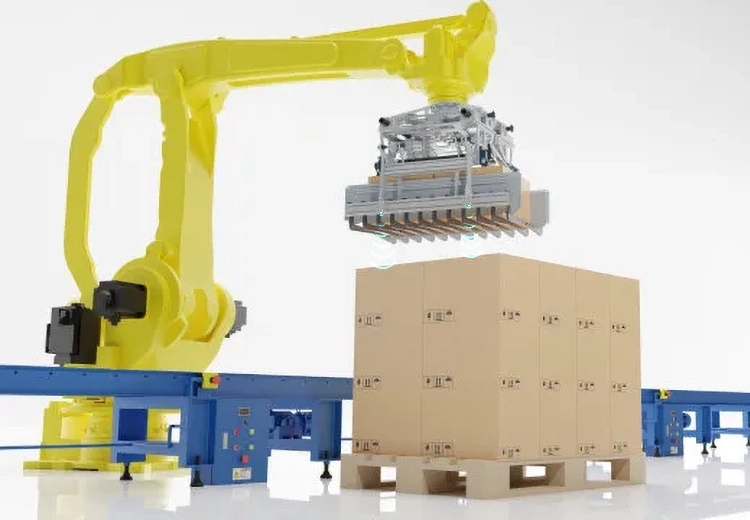
As aplicações típicas incluem:
- Deteção da altura de empilhamento das placas;
- Deteção de caixa em posição;
- Deteção da distância entre paletes;
- Evasão de obstáculos por robôs;
- Controlo interno da posição da peça de trabalho no equipamento;
- Deteção da altura ou da presença da caixa de cartão nas linhas de embalagem.
Sugestões de instalação: Ao medir os sólidos duros, certificar-se, tanto quanto possível, de que:
- O sensor está virado para a superfície do alvo;
- A área alvo é maior do que a área de cobertura do feixe;
- A superfície não está demasiado inclinada;
- Evitar que as arestas, os orifícios ou as estruturas fortemente irregulares fiquem virados para a sonda;
- No caso de superfícies lisas de metal ou vidro, mesmo um ligeiro desvio angular pode provocar a deflexão do eco, resultando numa perda de sinal.
3. Materiais granulares e pós
Os grânulos e os pós são o tipo de materiais que a maioria dos engenheiros de ensaio experimentam quando concebem um sistema completo de medição do nível do silo com aplicações ultra-sónicas.
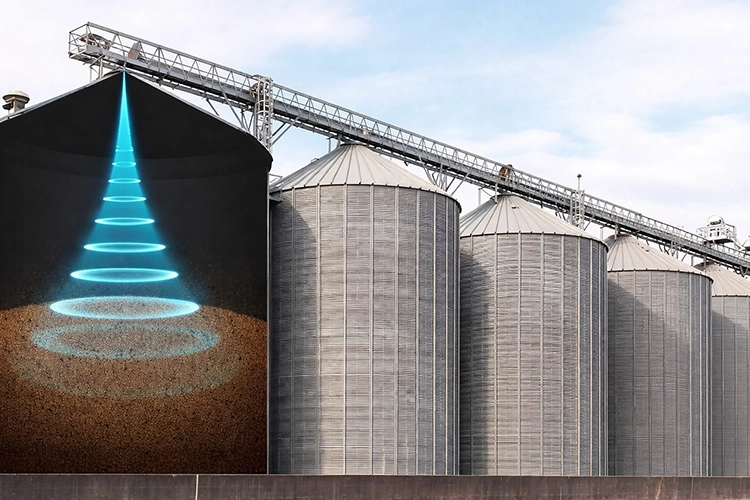
Os materiais mais comuns incluem:
- Grânulos de plástico;
- Grãos, milho, trigo e soja;
- Pellets para alimentação animal;
- Areia, pedra, partículas de minério;
- Cimento, pó de cal, pó mineral;
- Pós químicos;
- Lascas de madeira, pellets de combustível;
- Pós alimentares, amido, farinha.
Em cenários como tanques de armazenamento, silos e camiões cisterna, actuando como um detetor de nível de monitor de depósito fiável, estes sensores são frequentemente utilizados para a medição do nível de líquidos, lamas, gases liquefeitos, bem como pós sólidos e grânulos.
Porque é que os grânulos e os pós são “mensuráveis mas complexos”? A dificuldade não reside na incapacidade de reflexão dos ultra-sons, mas no facto de a morfologia da superfície desses materiais ser normalmente irregular. Quando se monitoriza um silo de cereais, os materiais em pó e granulares formam normalmente uma pilha cónica após a queda, e o ângulo da sua inclinação é conhecido em engenharia como o Ângulo de Repouso. Quando as ondas sonoras atingem esta superfície inclinada do material, os ecos reflectem-se facilmente, fazendo com que o sensor de nível não receba um sinal suficientemente forte.
Além disso, os materiais em pó podem também causar os seguintes problemas:
- Geração de poeira maciça durante a queda;
- Superfícies de materiais soltos que provocam a absorção ou a dispersão das ondas sonoras;
- Superfícies irregulares que conduzem a ecos instáveis;
- A acumulação de material nas paredes do silo gera facilmente ecos falsos;
- Estruturas complexas de silos, vigas transversais internas ou tubagens que causam interferências acústicas;
- Aderência de poeiras à superfície da sonda do sensor, reduzindo a eficácia da emissão e da receção.
Em que condições os grânulos/pós são mais adequados para os ultra-sons? A taxa de sucesso da medição ultra-sónica é mais elevada quando estão reunidas as seguintes condições
- O silo não é particularmente profundo;
- A poeira não se encontra num estado difuso de alta concentração contínua;
- As partículas de material são relativamente grandes e a superfície é bastante densa;
- A altura do nível muda lentamente;
- A posição de instalação pode efetivamente evitar a entrada de alimentação;
- O sensor pode apontar para a superfície média do material, tanto quanto possível;
- O sensor selecionado tem um pequeno ângulo de feixe para reduzir a interferência da reflexão na parede;
- O sítio permite a depuração de ecos ou o processamento de filtros.
Quando é que se deve ser cauteloso? Os cenários que se seguem requerem extrema cautela durante a seleção e, se necessário, devem ser realizados primeiro testes de amostras:
- Pós ultrafinos ou pós extremamente leves e muito fofos;
- Ambientes de queda contínua acompanhados de muito pó;
- Silos extremamente altos e muito estreitos;
- O ângulo de repouso da superfície do material é demasiado grande;
- Existem componentes estruturais complexos no interior do silo;
- Ambientes com forte vibração ou forte fluxo de ar;
- Acompanhado de vapor a alta temperatura ou de gases corrosivos perceptíveis.
Para a medição de grânulos e pós, recomenda-se não olhar apenas para o “limite superior do alcance”, mas considerar de forma abrangente o ângulo do feixe, a zona cega, os algoritmos de processamento de eco, a classificação de proteção do invólucro, a estrutura à prova de pó e a posição de instalação razoável.
Que materiais são inadequados ou propensos a falsos alarmes?
Os conselhos de seleção verdadeiramente profissionais devem não só indicar “o que pode ser medido”, mas também especificar claramente “quando não é recomendada a sua utilização”. Esta é uma norma importante para avaliar se um fornecedor tem uma profunda experiência em engenharia.
1. Materiais que absorvem o som e superfícies irregulares macias
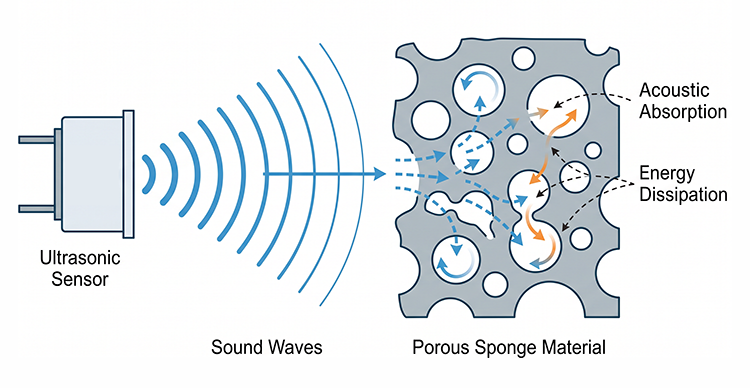
Os seguintes materiais não são geralmente adequados para medições estáveis utilizando sensores ultra-sónicos comuns:
- Esponja, espuma de algodão, esferovite espessa;
- Feltro, algodão, fibras têxteis;
- Pós extremamente fofos ou materiais leves com superfícies muito soltas;
- Superfícies irregulares dos sacos de embalagem macios.
Motivo principal: Estes materiais absorvem ou dispersam grandes quantidades de energia acústica. Depois de a onda sonora ser emitida, não é possível formar um eco suficientemente forte e concentrado e o sensor é extremamente propenso a não ter sinal, a saltar valores ou a ter falsos alarmes. Em suma, os alvos macios ou com superfícies extremamente irregulares não são objectos ideais para a medição acústica.
Se o processo no local exigir a deteção de tais materiais, considerar:
- Aumentar a superfície de reflexão do alvo ou alterar o ângulo de instalação;
- Diminuição da distância real de deteção;
- Utilização de sensores com maior potência acústica ou frequências de funcionamento específicas;
- Deve ser verificado através de ensaios efectivos no local;
- Se necessário, mudar decisivamente para métodos de pesagem, radar, interruptores de limite mecânicos ou outros princípios de deteção.
2. Líquidos com espuma extremamente espessa ou flutuações violentas na superfície
A espuma é um fator de interferência muito típico e complicado na medição ultra-sónica do nível de líquidos. Uma espuma fina e ligeira pode, por vezes, ser melhorada através da filtragem algorítmica e da otimização da instalação, mas se a superfície do líquido estiver coberta por uma camada espessa de espuma, é muito provável que os ultra-sons sejam completamente absorvidos e dispersos pela camada de espuma, o que conduz a flutuações violentas nos valores medidos, e o sensor pode mesmo medir apenas a “superfície da espuma” em vez da verdadeira altura do nível do líquido.
Os cenários propensos a problemas incluem:
- Cubas de fermentação, cubas de arejamento;
- Caldeiras de reação fortemente agitadas;
- Depósitos de espuma de limpeza;
- Líquidos que contêm grandes quantidades de tensioactivos;
- Contentores em operações de enchimento ou drenagem a alta velocidade;
- Superfícies líquidas violentamente agitadas em cubas.
Sugestões de resposta: Para espuma, superfícies líquidas com flutuações violentas e ambientes com pó, recomendam-se as seguintes medidas:
- Instale o sensor numa área relativamente calma da superfície do líquido, certificando-se de que evita as entradas de alimentação e o centro de agitação;
- Utilizar um tubo de guia de ondas ou um poço de destilação para isolar fisicamente a espuma e melhorar a estabilidade da superfície do líquido;
- Definir tempos de filtragem razoáveis no sistema de controlo;
- Confirmar a espessura real da espuma no local; se a espuma for consistentemente muito espessa, avaliar de forma decisiva soluções alternativas, tais como radar ou transmissores hidrostáticos.
3. Ambientes de vácuo e ambientes de vapor/condensação extremos
As caraterísticas físicas dos ultra-sons ditam que estes devem depender do ar ou de outros meios gasosos para a sua propagação. Sem um meio de propagação, as ondas sonoras não podem de forma alguma atingir o alvo. Por isso, os sensores de nível ultra-sónicos de ar comuns não podem ser utilizados dentro de um tanque de vácuo. Esta é uma limitação determinada por princípios físicos fundamentais e não uma diferença técnica entre marcas de sensores.
Além disso, os ambientes de vapor e condensação a temperaturas extremamente elevadas também colocam grandes desafios:
- O excesso de vapor altera a densidade do meio de ar, alterando assim a velocidade do som e causando uma medição de distância imprecisa;
- Uma grande quantidade de água condensada que adira à superfície da sonda atenuará gravemente o sinal acústico;
- Os gradientes de temperatura no interior do contentor provocam erros de propagação das ondas sonoras (Nota: Os nossos produtos estão equipados de série com uma função de compensação da temperatura para resolver este problema);
- Ambientes de alta humidade e alta temperatura a longo prazo podem afetar a vida útil dos componentes electrónicos internos (Nota: Os nossos produtos são submetidos a rigorosos testes de envelhecimento antes de saírem da fábrica para garantir a estabilidade a longo prazo);
- Os gases corrosivos podem danificar os invólucros normais ou os materiais do transdutor (neste caso, devem ser selecionadas as nossas séries de sondas e sensores anti-corrosão).
Tal como as gamas de temperatura e pressão aplicáveis são realçadas em muita documentação sobre medidores de nível de líquidos, os sensores ultra-sónicos também têm os seus limites físicos distintos. Recomenda-se uma seleção cuidadosa nos seguintes cenários:
- Tanques de vácuo ou contentores selados a alta pressão;
- Tanques de vapor a alta temperatura, ambientes com forte condensação;
- Ambientes de gás fortemente corrosivos;
- Equipamentos com temperaturas internas que se alteram violentamente;
- Condições em que o vapor limpa continuamente a posição de instalação da sonda.
Guia de Integração Industrial: Como selecionar os parâmetros do sensor ultrassónico ISSRSensor com base no material?
Como fábrica de fabrico de sensores subjacentes, quando ajudamos os clientes na seleção, nunca nos limitamos a dizer “pode ser medido”, mas dedicamo-nos a traduzir as caraterísticas complexas dos materiais em parâmetros específicos dos sensores. Para PLCs, DCSs ou sistemas de controlo de equipamentos de nível inferior, a principal exigência é sempre a obtenção de um sinal elétrico que seja estável, repetível e fácil de integrar.
A série de sensores ultrassónicos industriais ISSRSensor é amplamente utilizada em cenários como o alcance, o nível de líquidos, o nível de materiais, a deteção de materiais transparentes, a deteção de folhas duplas e a deteção de correção de desvios. Ao selecionar, recomenda-se que se concentre na avaliação dos seguintes parâmetros:
1. Alcance e zona cega: Evitar ser “ávido de grande alcance”
Os sensores ultra-sónicos têm normalmente uma área não mensurável a curta distância, conhecida como “Zona Cega”. Dentro da zona cega, depois de o sensor ter acabado de emitir uma onda sonora, o transdutor ainda está na fase de recuperação do toque e não pode receber ecos de forma fiável a distâncias extremamente próximas.
Por conseguinte, ao selecionar, é necessário confirmar simultaneamente: a distância mínima de deteção, a distância máxima de deteção, a altura de instalação, os pontos de nível mais alto/baixo, a estrutura interna do tanque e a capacidade de reflexão da superfície alvo. O alcance, a zona cega e o âmbito real de medição são parâmetros fundamentais que se condicionam mutuamente.
Lógica de seleção:
- Curtas distâncias/pequenos contentores/peças de trabalho pequenas: Preferir sensores de alta frequência, pequeno alcance e pequena zona de cegueira;
- Tanques de armazenamento médio ou tanques de água: Escolha uma gama média, equipada com modelos que têm saídas analógicas estáveis;
- Grandes silos/grandes espaços: Escolha modelos de baixa frequência e de grande alcance com ângulos de feixe mais estreitos;
- Poeiras ou materiais granulares: Dê prioridade à intensidade do sinal, ao ângulo do feixe e ao ângulo de instalação correto;
- Contentores estreitos: Deve ser selecionado um ângulo de feixe estreito para evitar que o feixe de som atinja as paredes do silo e gere ecos falsos.
Nunca procure cegamente um alcance extragrande apenas “por segurança”. Um alcance demasiado grande não só traz uma zona cega maior, como também leva a um feixe mais largo, a uma resolução mais baixa e introduz mais interferências no local que são difíceis de gerir. A abordagem correta é: um alcance que cubra apenas a distância de deteção real e deixe uma margem de engenharia razoável é suficiente.
2. Frequência e ângulo do feixe: Equilíbrio entre penetração, resolução e anti-interferência
As frequências de funcionamento dos sensores ultra-sónicos variam normalmente entre dezenas de kHz e centenas de kHz, correspondendo diferentes frequências a caraterísticas acústicas distintas:
- Ultra-sons de baixa frequência: Propaga-se mais longe e é extremamente insensível à atenuação do ar, o que o torna mais adequado para grandes silos e superfícies rugosas; mas o seu feixe é normalmente mais largo e a sua resolução é relativamente mais baixa.
- Ultra-sons de alta frequência: Feixe altamente concentrado, resolução extremamente elevada e zona cega mais pequena, o que o torna muito adequado para a deteção de precisão a curta distância; a desvantagem é a atenuação notória do sinal a longas distâncias.
Para materiais em pó e granulares, a escolha de um ângulo de feixe mais estreito pode contornar eficazmente as reflexões das paredes e a interferência de componentes estruturais internos. Para grandes superfícies planas de líquidos, os requisitos para o ângulo do feixe são relativamente pouco exigentes, mas deve ser dada atenção para evitar entradas de alimentação, pás de agitação ou tubos de queda.
3. Sinal de saída: Correspondência estreita com as necessidades de controlo PLC/DCS
O formato de saída do sensor de nível ultrassónico determina diretamente a forma como este se integrará na sua arquitetura de automação.
-
Saída de comutação (PNP / NPN)
- Cenários aplicáveis: Alarmes de nível alto/baixo, proteção contra transbordo, deteção de silo vazio, deteção de presença e de posição da peça.
- Lógica: Quando o material atinge o limiar definido, emite diretamente um sinal ON/OFF para o PLC. Muito adequado para a deteção simples em posição no equipamento de embalagem ou para alarmes de depósito de água cheio.
-
Saída analógica (4-20mA / 0-10V)
- Cenários aplicáveis: Monitorização contínua do nível de líquidos/materiais, estimativa da capacidade do depósito de armazenamento, registo de tendências DCS.
- Lógica: A norma industrial 4-20mA tem capacidades anti-interferência excecionalmente fortes e é adequada para transmissão a longa distância; 0-10V tem cablagem simples e é adequada para distâncias mais curtas ou integração interna em caixas de controlo elétrico de equipamentos.
-
Saída de comunicação digital (RS485 / Modbus, etc.)
- Cenários aplicáveis: Monitorização centralizada de vários tanques, comunicação remota em rede, acoplamento com gateways inteligentes e integração de plataformas IoT.
- Vantagem: Pode não só ler distâncias, mas também adquirir o estado de funcionamento e informações de diagnóstico do sensor.
A chave para a seleção não é quanto mais funções melhor, mas sim que o formato de saída deve corresponder perfeitamente ao sistema de controlo existente do cliente.
4. Material do invólucro, grau de proteção e ambiente no local
O facto de um material ser teoricamente adequado para a medição ultra-sónica não significa que um sensor de qualquer forma exterior possa suportar os rigores do ambiente no local. Ao selecionar, é necessário confirmar se o local apresenta os seguintes desafios:
- É necessário um grau de proteção IP67 ou mesmo superior?
- Será exposta a vapor de água, concentrações elevadas de pó ou manchas de óleo durante muito tempo?
- Existem gases químicos corrosivos no local e são necessárias sondas anti-corrosão (por exemplo, material PTFE)?
- Existem ambientes com temperaturas extremamente altas e baixas ou impactos mecânicos?
- O espaço de instalação do equipamento é limitado, exigindo uma estrutura compacta?
- Quais são as normas de instalação específicas para flanges, roscas ou suportes no local?
Exemplos de cenários: A indústria de tratamento de água valoriza mais a impermeabilização e a anti-corrosão; os silos de pó valorizam muito a impermeabilização contra poeiras e a anti-aderência; o equipamento de embalagem exige uma velocidade de resposta rápida, pequenas zonas cegas e facilidade de instalação compacta.
5. Deteção alargada de processos específicos: Materiais transparentes, folhas duplas e correção de desvios
O limite técnico dos sensores ultra-sónicos vai muito além da medição ao nível do material. Uma vez que fisicamente não dependem de caraterísticas ópticas, em cenários altamente desafiantes onde os sensores fotoeléctricos tendem a falhar, os ultra-sons são frequentemente a única solução fiável.
A série de sensores ultra-sónicos industriais ISSR não só é excelente para completar a medição de distâncias e a monitorização de níveis, como também é amplamente utilizada em..:
- Deteção precisa de películas transparentes/etiquetas totalmente transparentes;
- Deteção de folha dupla ou sobreposição de papel, folha metálica e película de plástico;
- Correção de desvios de alta precisão dos bordos do material de embalagem;
- Feedback à distância em tempo real em linhas de produção automatizadas.
Nas indústrias de fabrico de papel, de baterias de lítio, de películas altamente reflectoras e de impressão de alta qualidade, os ultra-sons têm utilizado a transmissão acústica, a reflexão e as diferenças de atenuação para alcançar uma estabilidade muito superior à dos princípios fotoeléctricos. Por conseguinte, na automação industrial moderna, os sensores ultra-sónicos não devem ser vistos apenas como “medidores de nível de líquido”; são, de facto, componentes nucleares de deteção acústica sem contacto, capazes de emitir diversos sinais de controlo.
Tabela de julgamento rápido: Que materiais são adequados para sensores de nível ultra-sónicos?
| Tipo de material | Aplicabilidade | Motivo principal | Sugestões de seleção e instalação |
|---|---|---|---|
| Água limpa, esgotos, líquido de refrigeração | Elevado | A superfície do líquido é contínua e plana, e o eco é nítido e estável | Ter o cuidado de evitar zonas de flutuação violenta e de espuma e confirmar a altura de instalação |
| Óleos, óleos usados | Elevado | A superfície pode normalmente formar um reflexo espelhado estável | Avaliar a névoa de óleo no local, a concentração de vapor e a temperatura ambiente |
| Líquidos químicos | Médio-Alto | A grande maioria dos líquidos pode formar reflexos efectivos | Deve confirmar a corrosividade, selecionar sondas anti-corrosão conforme adequado |
| Lama, líquidos turvos | Médio-Alto | A propagação da onda sonora não é afetada pela cor e turbidez do líquido | Prestar atenção à prevenção da deposição excessiva no fundo, da flutuação da superfície do líquido e da espuma na superfície |
| Placas de metal, placas de vidro, plástico duro | Elevado | Os materiais duros e planos são densos e o eco acústico é extremamente forte | Deve certificar-se de que o sensor é instalado verticalmente ao quadrado da superfície alvo |
| Caixas, paletes, pilhas de cartão | Elevado | Grande área de reflexão do alvo, sinal estável e fiável | Evitar que as arestas da peça de trabalho ou as superfícies inclinadas fiquem viradas para a sonda |
| Grãos, grânulos de plástico | Médio-Alto | A dimensão das partículas é suficientemente grande para formar uma superfície de reflexão acústica eficaz | Concentre-se em avaliar o ângulo de repouso do material e evite a área de poeira da entrada de alimentação |
| Cimento, pó mineral, pó químico | Médio | As superfícies irregulares provocam facilmente a dispersão e a poeira absorve a energia acústica | Recomenda-se vivamente a realização de testes no local; são preferíveis os modelos de feixe estreito e de alta potência |
| Esponja, espuma, algodão e outros materiais macios | Baixa | Os materiais macios absorvem fortemente as ondas sonoras e os ecos são extremamente fracos | É altamente desaconselhável a utilização direta de ultra-sons normais; devem ser consideradas soluções alternativas |
| Superfícies líquidas cobertas com espuma espessa | Baixa | A camada de espuma absorve e dispersa completamente as ondas sonoras | Considerar a instalação de um tubo de guia de ondas ou mudar para equipamento de radar/princípio hidrostático |
| Interior dos depósitos de vácuo | Não aplicável | Na ausência de um meio de ar, o som não pode absolutamente propagar-se no vácuo | Pertence a uma limitação física; devem ser escolhidos medidores de nível de líquido baseados noutros princípios |
| Ambientes de vapor a alta temperatura | Baixo-Médio | O vapor altera a velocidade do som no meio e a aderência da condensação afecta a sonda | Deve estar equipado com uma função de compensação da temperatura, para confirmar o risco de formação de condensação |
Conclusão: Para avaliar se pode ser medido, o cerne da questão reside na “refletividade acústica” e no “meio ambiente”
Em resumo, o sensor ultrassónico de nível de tanque é uma solução de medição sem contacto com uma gama de aplicações extremamente vasta, uma relação custo-eficácia excecionalmente elevada e uma grande facilidade de integração em sistemas PLC/DCS. O seu desempenho é excecionalmente bom nos seguintes cenários:
- Níveis de líquidos em vários contentores (tratamento de água, esgotos, reservatórios de óleo, reservatórios de armazenamento de produtos químicos);
- Deteção de sólidos planos duros (controlo da distância de caixas, placas, paletes, peças de trabalho);
- Controlo das licenças de materiais granulares e de certos silos de pó;
- Reconhecimento preciso sem contacto de alvos transparentes, escuros e altamente reflectores.
No entanto, é necessário manter o rigor e a prudência no domínio da engenharia quando se enfrentam as seguintes condições extremas:
- Materiais macios com forte absorção de som e pós leves extremamente fofos;
- Líquidos com superfícies cobertas de espuma espessa ou que se agitam violentamente;
- Ambientes de vácuo, vapor a alta temperatura ou ambientes de forte condensação;
- Silos de pó com estruturas internas anormalmente complexas.
Para a seleção de engenharia dos engenheiros de automação, o método mais fiável nunca é apenas ler os títulos promocionais dos produtos, mas sim fazer uma avaliação abrangente que combine as caraterísticas acústicas próprias do material, o espaço de instalação no local, o grau de correspondência entre o alcance e a zona cega, o tamanho do ângulo do feixe, o sinal de saída necessário e as condições ambientais reais do meio.
Se procura sensores ultra-sónicos de nível/alcance estáveis e fiáveis para silos, tanques de armazenamento, tanques de água, equipamento de embalagem ou linhas de produção automatizadas, é bem-vindo a visitar a ISSRSensor industrial série de sensores ultra-sónicos ou contacte a ISSRSensor para obter apoio profissional para testes de amostras e sugestões de parâmetros de seleção.
FAQ
Q1: A cor ou a transparência do material alvo afectam os resultados da medição de um sensor ultrassónico de nível do depósito?
A1: Não, não são. Os sensores ultra-sónicos baseiam-se no princípio da reflexão das ondas sonoras (ou seja, a propagação e o ressalto das ondas sonoras) e não nas propriedades ópticas. Por isso, podem detetar de forma fiável e precisa materiais transparentes, escuros ou altamente reflectores, o que os torna uma alternativa altamente fiável em cenários onde os sensores fotoeléctricos podem falhar.
P2: Os sensores de nível ultra-sónicos podem ser utilizados para medir materiais granulares e em pó?
A2: Sim, mas é necessário ter cuidado ao selecionar um modelo. Embora sejam capazes de medir grãos, pellets de plástico e pós densos, as morfologias de superfície extremamente irregulares (tais como ângulos de repouso acentuados) e poeiras pesadas transportadas pelo ar podem dispersar ou absorver a energia das ondas sonoras. Para tais aplicações, recomenda-se vivamente a seleção de um sensor com um ângulo de feixe estreito e potência de transmissão suficiente, e a sua instalação longe da entrada do material.
Q3: Os sensores de nível ultra-sónicos são adequados para líquidos com uma camada espessa de espuma a cobrir a superfície?
A3: Geralmente, não. Uma camada espessa e contínua de espuma actua como um material macio e absorvente de som que absorve e dispersa completamente as ondas ultra-sónicas. Isto resulta em sinais fracos, leituras erráticas ou até mesmo o sensor mede apenas o “topo da espuma” em vez do nível real do líquido. Para líquidos com espuma significativa, recomenda-se a utilização de um sistema de medição assistido por guia de ondas ou a mudança para sensores de radar ou hidrostáticos.
Q4: Porque é que os sensores ultra-sónicos não podem ser utilizados num ambiente de vácuo?
A4: Isto deve-se a uma limitação física fundamental. Os sensores ultra-sónicos funcionam com base na medição do “tempo de voo” (TOF) das ondas sonoras. A propagação do som requer um meio físico (como o ar ou outros gases). No vácuo, a ausência de um meio para transportar as ondas sonoras para trás e para a frente entre o sensor e o objeto alvo torna a medição totalmente impossível.
P5: O que é a “zona cega” de um sensor ultrassónico? Porque é que não devo simplesmente escolher um sensor com a maior gama de medição possível?
A5: A zona cega refere-se à área imediata diretamente à frente do sensor; dentro desta zona, o sensor não pode receber sinais de eco de forma fiável porque o transdutor ainda está na sua “fase de recuperação” imediatamente após a transmissão de um impulso sonoro. Os sensores com uma gama de medição máxima maior apresentam normalmente uma zona cega maior, um ângulo de feixe mais alargado e uma resolução relativamente mais baixa. Por conseguinte, deve selecionar um sensor cujo alcance de medição cubra precisamente a distância de deteção real (permitindo uma margem de engenharia razoável) para evitar interferências desnecessárias.
Q6: Os sensores ultra-sónicos podem medir materiais macios, como esponjas, algodão ou feltro?
A6: Isto é fortemente desaconselhado. Materiais macios, porosos ou fofos tendem a absorver quantidades significativas de energia acústica. Quando as ondas sonoras atingem estas superfícies, não conseguem gerar um eco suficientemente forte e focado para refletir de volta para a sonda do sensor; isto resulta frequentemente em perda de sinal ou leituras falsas.
Q7: Como é que o vapor a alta temperatura e a condensação afectam as medições ultra-sónicas?
A7: Ambientes de vapor extremos alteram a densidade do meio de ar, mudando assim a velocidade do som e levando a cálculos de distância imprecisos. Além disso, a acumulação de condensação significativa na sonda do sensor pode atenuar gravemente o sinal ultrassónico. Para tais ambientes, é necessário selecionar sensores equipados com compensação de temperatura incorporada e concepções anti-condensação.
Q8: Que tipos de sinais de saída fornecem normalmente os sensores de nível ultra-sónicos industriais para facilitar a integração da automação?
A8: Normalmente, oferecem três tipos principais de sinais de saída para satisfazer os requisitos dos sistemas de controlo PLC/DCS: saídas discretas (PNP/NPN), utilizadas para alarmes simples de nível alto/baixo ou deteção de posição; saídas analógicas (4-20mA / 0-10V), utilizadas para monitorização contínua de níveis de líquidos ou materiais; e saídas de comunicação digital (RS485 / Modbus), utilizadas para ligação em rede multiponto e integração de dispositivos inteligentes.
-

ISSRSensor 3M Sensor de Nível Ultrassónico Tudo-em-Um | Analógico/Comutador/Digital
-
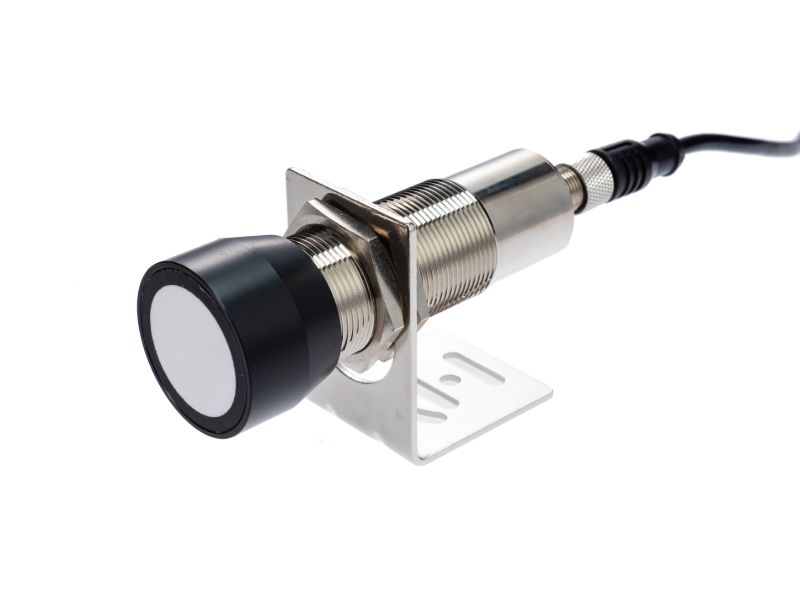
ISSRSensor 4M Sensor de Distância Ultrassónico de Nível Tudo-em-Um Interruptor/Saída Analógica/Digital
-
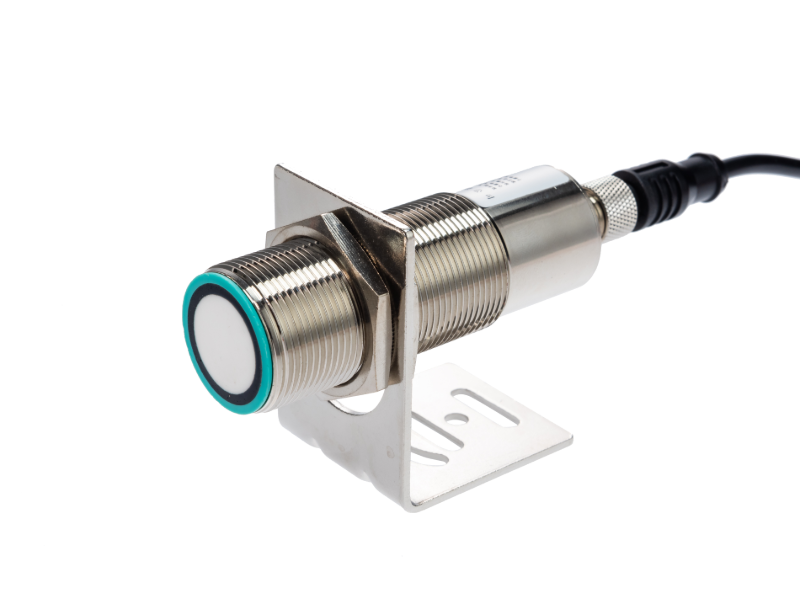
ISSRSensor Sensor Ultrassónico Tudo-em-Um 500MM: Interruptor, saída analógica e de dados
-
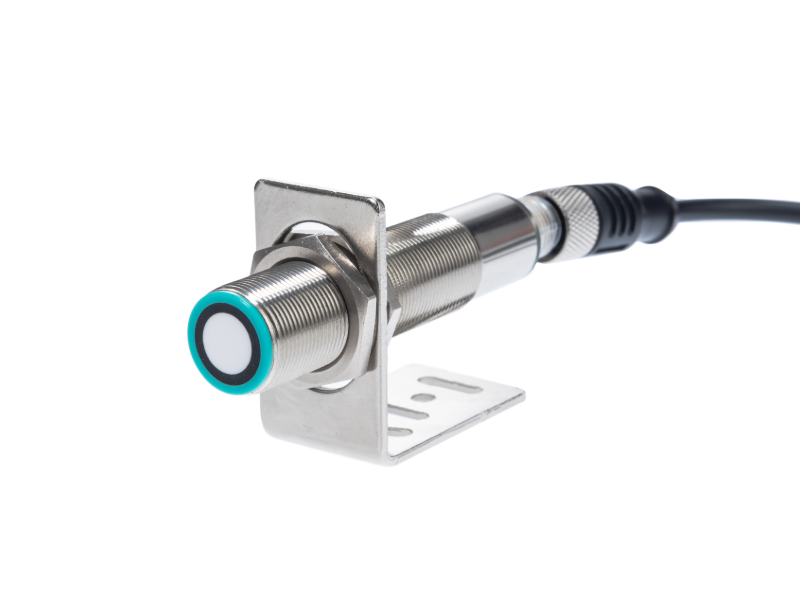
ISSRSensor Sensor ultrassónico tudo-em-um: Nível de alcance de 1m e deteção de objectos
-
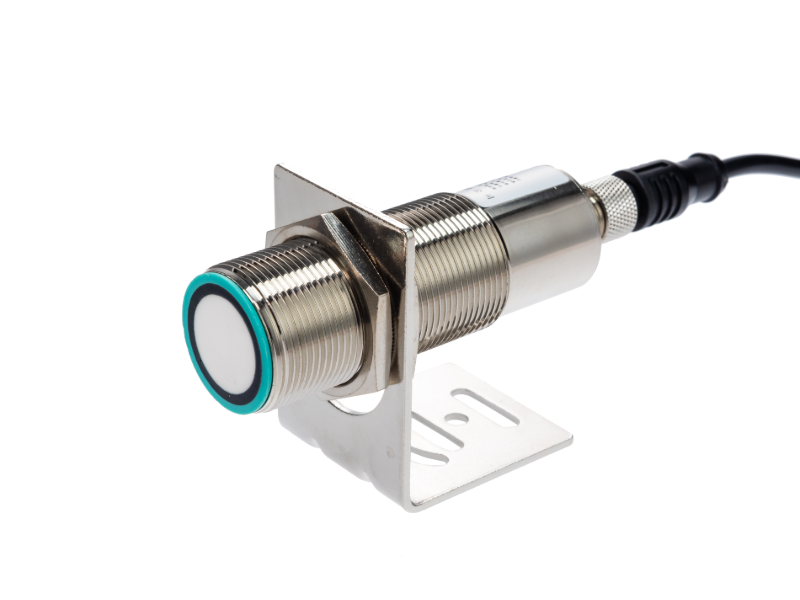
Sensor de nível de líquido ultrassónico 2M totalmente integrado ISSRSensor
-
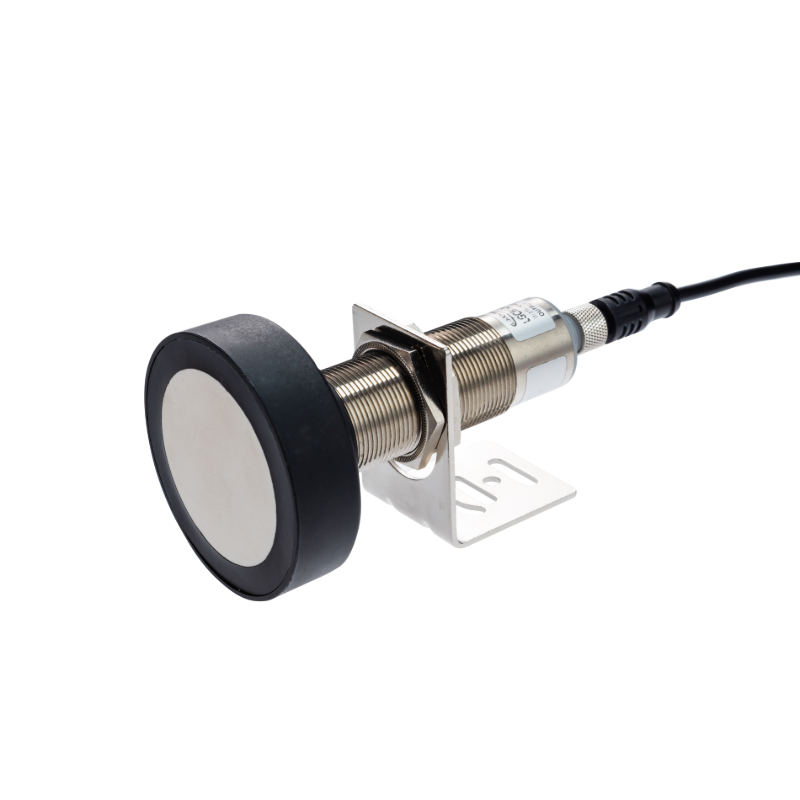
ISSRSensor 6M Sensor de Nível Ultrassónico|Múltiplas Saídas Analógicas/Comutação/Digital