


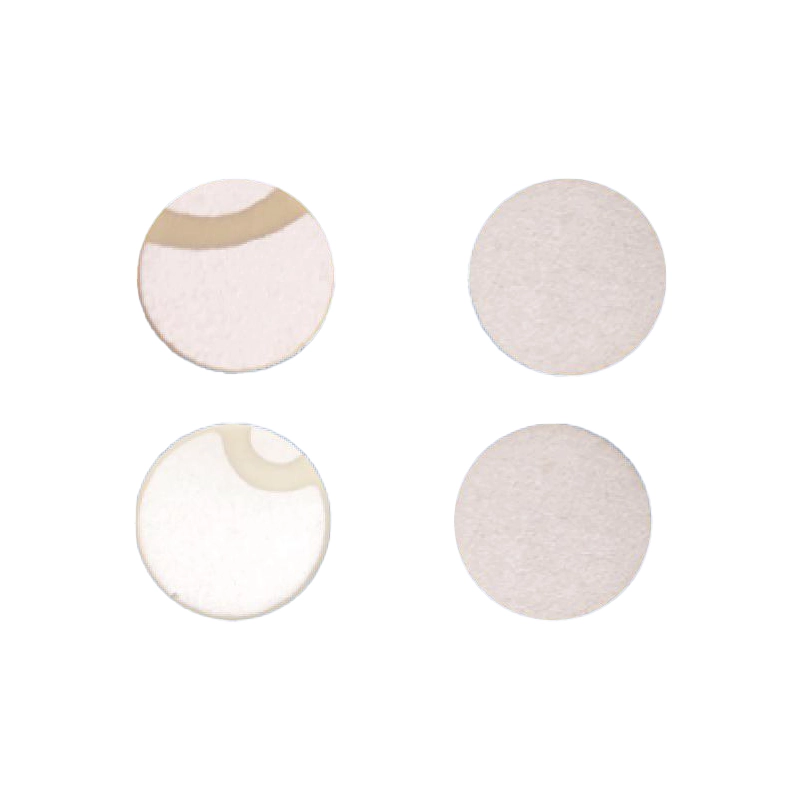
High-Performance Piezoelectric Ceramic Plates for Ultrasonic Anemometers
Piezoelectric Ceramic Elements, Ultrasonic Wind Vane Parts, Wind Speed Sensor Components, PZT Material, High Electromechanical Coupling, Resonant Frequency Stability, for Ultrasonic Anemometer Transducer, Acoustic Transducer, Weather Station Sensors, Meteorological Instruments
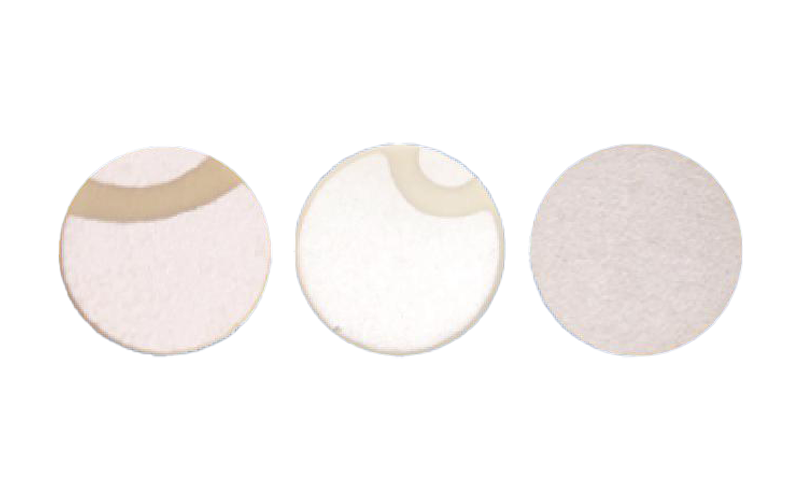
Engineered for precision meteorology and industrial airflow monitoring, this Piezoelectric Ceramic Elements for Ultrasonic Anemometers serve as the core acoustic transducers in modern wind sensing technology. Unlike traditional mechanical cups, these high-sensitivity PZT (Lead Zirconate Titanate) components enable non-contact, inertia-free measurement of wind speed and direction via the time-of-flight method.
Utilizing advanced sintering technology, our piezoelectric elements deliver exceptional electromechanical coupling characteristics (Kp > 0.60) and superior frequency stability. These features are critical for minimizing phase noise and ensuring accurate data transmission in ultrasonic wind vanes, even under fluctuating environmental conditions.
Key Technical Advantages
High Sensitivity PZT Material: Optimized piezoelectric constants ensure strong signal transmission and reception, vital for detecting low-velocity airflow.
Precision Frequency Control: With a resonant frequency error of only ±2%, our elements reduce the need for complex calibration in your signal processing circuitry.
Stable Acoustic Impedance: Designed to match efficiently with acoustic matching layers, maximizing energy transfer into the air medium.
Durability: The ceramic structure offers robust resistance to aging and thermal cycling, maintaining performance in outdoor meteorological stations.
Applications
Our piezoelectric ceramic components are trusted by manufacturers in diverse sectors:
Ultrasonic Anemometers (2D/3D): For precise measurement of wind vectors in weather stations.
HVAC Airflow Monitoring: Ensuring efficient air circulation in smart building systems.
Marine Navigation: reliable wind sensing for autonomous vessels and buoys.
Why Choose ISSR Piezo Elements?
Achieving high measurement accuracy requires more than just a ceramic disc; it requires consistent resonant performance. Our rigorous quality control ensures that every batch maintains tight tolerances, reducing the deviation between sensors. This consistency allows for easier pair-matching, which is essential for the accuracy of ultrasonic time-difference measurements.
Specification
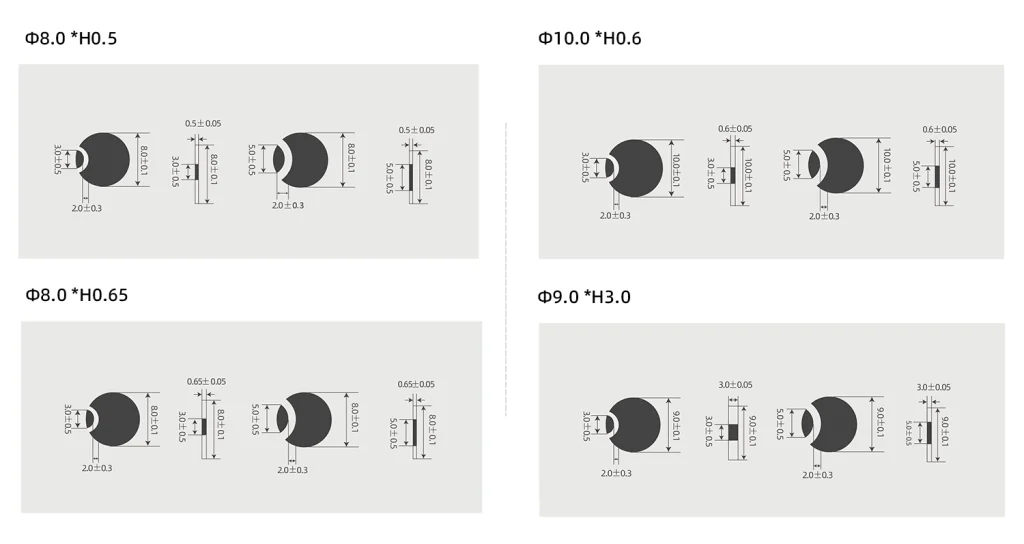
| Specifications and Dimensions Φ*Hmm | 8.0*0.5 | 8.0*0.65 | 10.0*0.6 | 9.0*3.0 | Other specifications can be customized |
|---|---|---|---|---|---|
| Resonant Frequency (kHz) | 250±2% | 250±2% | 200±2% | 220±2% | ✓ |
| Static Capacitance (PF) | 1350±15% | 1000±15% | 1800±15% | 300±15% | ✓ |
| Piezoelectric Strain Constant (D33) | >450, 1e-12C/N | ✓ | |||
| Electromechanical Coupling Coefficient (Kp) | >0.60 | ✓ | |||
| Mechanical Quality Factor (Qm) | 75 | ✓ | |||
| Operating Temperature (Tc) | 150 | ✓ | |||
| Curie Temperature (Tc) | 300 | ✓ | |||
Dimensions
Typical Applications
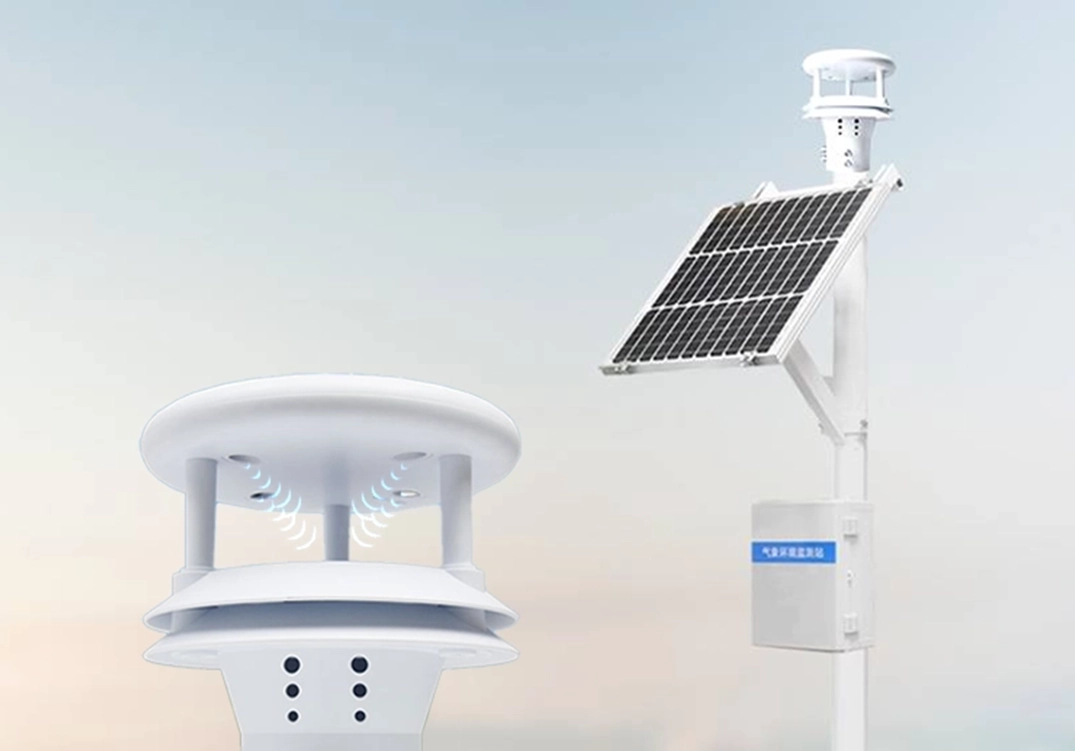
This high-performance piezoelectric ceramic element possesses excellent electromechanical coupling performance and stable resonance characteristics, making it a core transmitting and receiving component in meteorological monitoring equipment such as ultrasonic anemometers and wind vanes. Its precise acoustic response and reliable mechanical stability enable its widespread application in meteorological observation, environmental monitoring, wind tunnel testing, and fluid measurement equipment, providing a stable driving force for precision acoustic detection.