









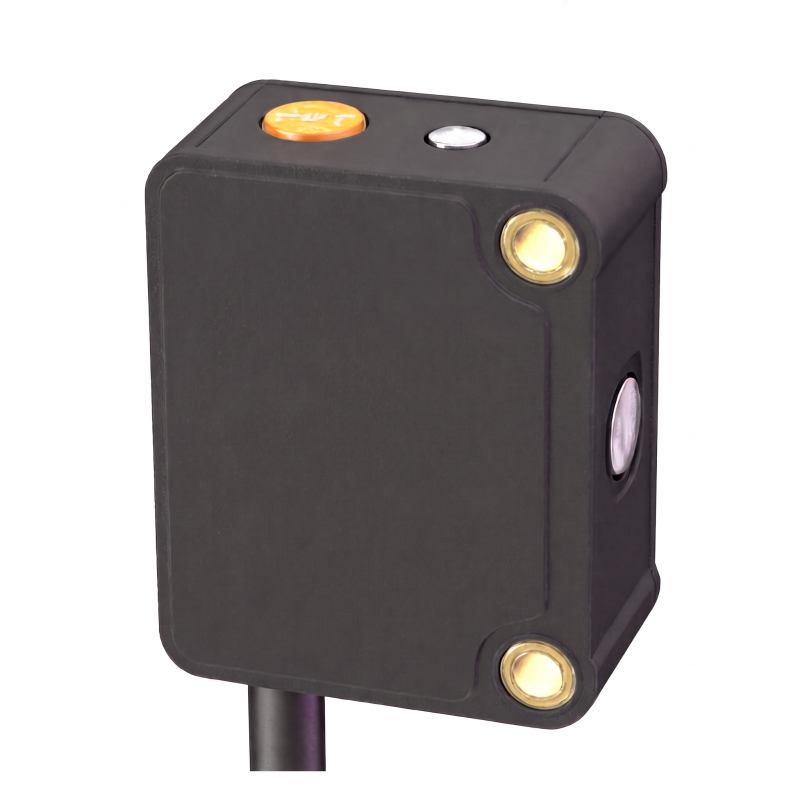
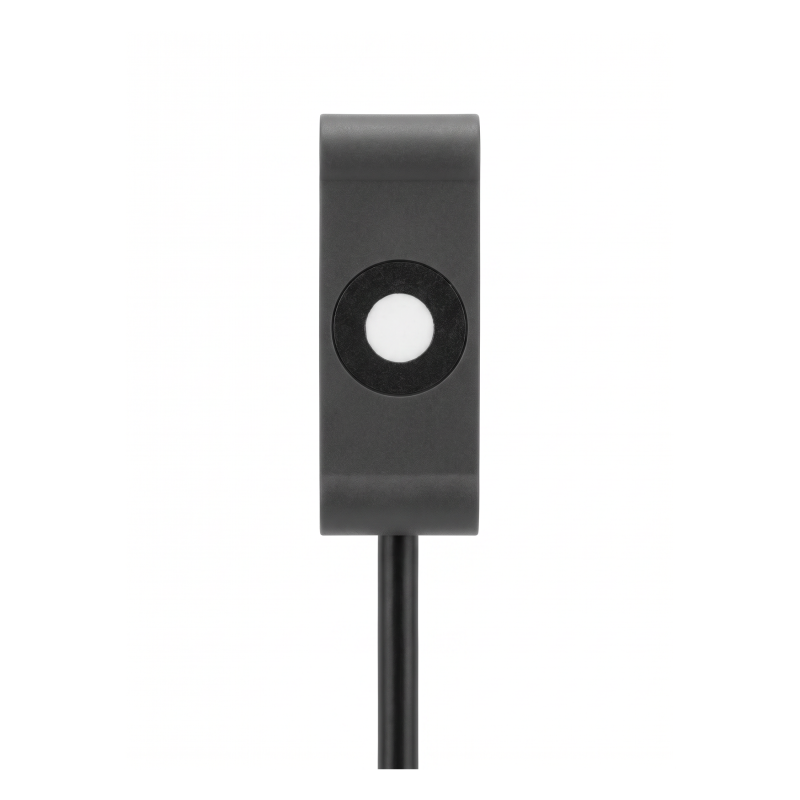
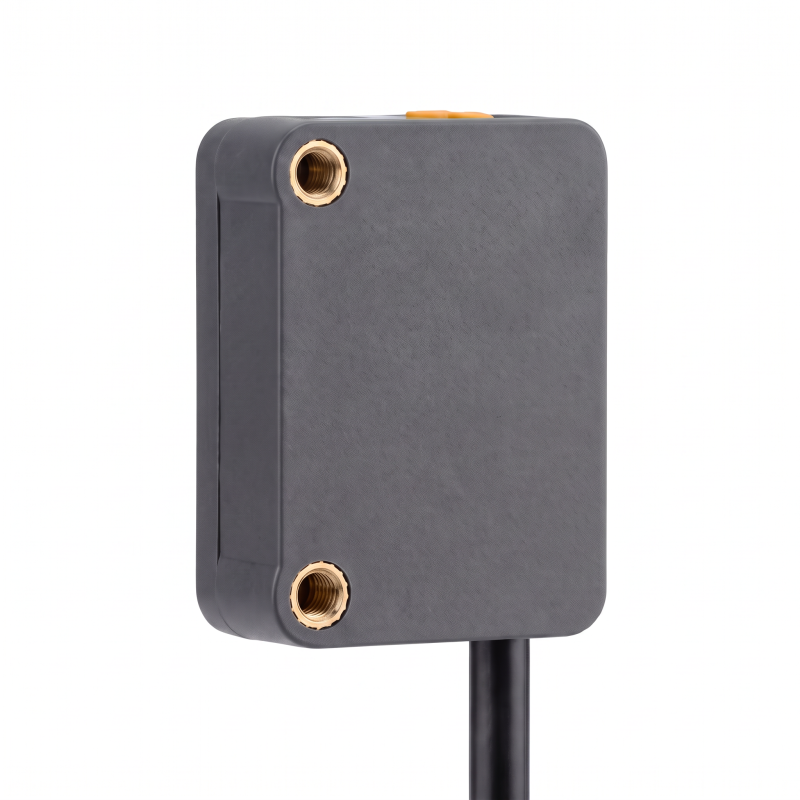
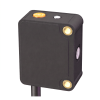
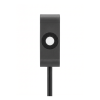
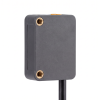
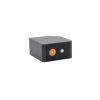
ISUB100-12F32-E-L35-F7J400B
ISSRSensor F7J Economy Series Ultrasonic Sensor
In automated systems, verifying object positioning, confirming workpiece presence, checking packaging transit, and validating the completion of pick-and-place cycles by gripping mechanisms typically rely on stable and reliable switching signals transmitted to a PLC or control module.
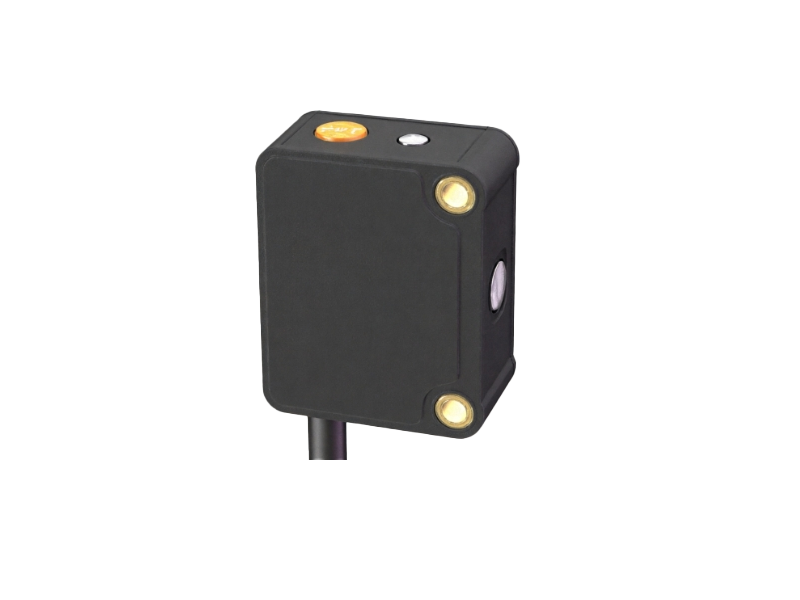
The F7J is an economical ultrasonic sensor developed for short-range object presence detection applications. By transmitting ultrasonic waves and receiving echoes from the target, the product determines whether a target object is “present” or “absent” and outputs a switching signal that can be connected directly to the digital input terminals of PLCs, relays, or controllers.
Compared with certain optical detection solutions that are more susceptible to color, gloss, transparency, and ambient light, ultrasonic detection is better suited for presence confirmation applications involving transparent or semi-transparent packaging, dark materials, reflective surfaces, and certain flexible materials. The product has a detection range of 10–100 mm and allows the switching point to be taught using the SET button. It also supports NPN/PNP and normally open/normally closed output logic configurations, making it easy to accommodate the wiring and logic requirements of different on-site control systems.
Key Features & Advantages
- Suitable for Transparency Detection: Ultrasonic detection does not rely on the target’s color, transparency, or visible-light reflectivity. Compared with some optical solutions, the F7J is better suited for presence detection of transparent/semi-transparent packaging, dark materials, and reflective surfaces.
- Short-Range Detection: The detection range is 10–100 mm, with an adjustment range of 20–100 mm, making it suitable for equipment stations with compact installation spaces and short detection distances. The output is triggered when the target is in position and automatically resets when the target leaves.
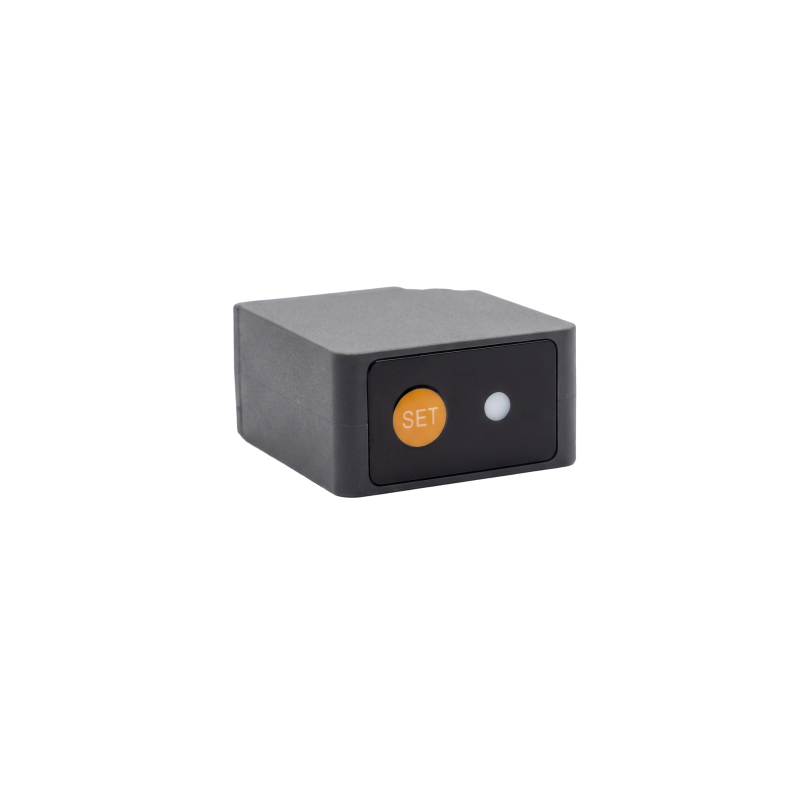
- SET Teaching: The SET button allows switching-point teaching and parameter setting. Place the target at the desired trigger position to complete on-site setup quickly.
- Fast Response: The typical response time is 6 ms, with a minimum of 3 ms, making the sensor suitable for conveying, picking, counting, position confirmation, and equipment interlocking.
- Flexible Output Options: Available in multiple proximity sensor types, including PNP and NPN configurations to match your PLC requirements.
- High-Speed Response: Optimized switching frequency for fast-moving conveyor lines and rapid object counting.
Electrical & Wiring Specifications
Before wiring, verify the supply voltage, PLC input type, and sensor output logic. When selecting an NPN/PNP and normally open/normally closed version, ensure it is compatible with the PLC digital input common terminal and the control program logic.
- Voltage: Operating range: 9...24V DC (compatible with 24V NPN or PNP systems)
- Electrical Connection:
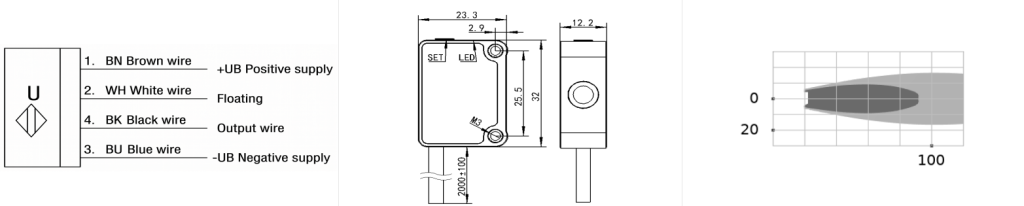
Pin Wire Color Function Description 1 BN Brown wire +UB Positive power supply 2 WH White wire Teach input 3 BU Blue wire -UB Negative power supply 4 BK Black wire Output wire
Note: Please refer to the proximity sensor wiring diagram in our downloadable manual for exact wiring instructions.
Common Applications
- Workstations and Assembly: Confirms the presence and correct position of parts, pallets, fixtures, and workpieces for process start, clamping, and safety interlocking.
- Transparent and Flexible Materials: Detects the presence and position of transparent packaging, films, flexible bags, rubber parts, nonwoven materials, and foam.
- Conveying and Packaging Equipment: Detects material arrival, passage, or departure on conveyor and packaging equipment for sorting, counting, and cycle control.
- Robots and Grippers: Supports pick-and-place confirmation and empty-grip prevention interlocking, helping reduce the risk of incorrect operation.
FAQ
Q1: Can this sensor detect transparent or semi-transparent objects?
A1: Yes. The ISUB100-12F32-E-L35-F7J400B uses ultrasonic echo detection and is well suited for transparent, semi-transparent, dark-colored, and certain reflective targets. However, on-site verification is still recommended based on target size, installation distance, target surface angle, and surrounding reflective conditions.
Q2: Can flexible packaging or soft materials be detected?
A2: Yes. It can be used for presence detection of flexible packaging, soft-pack materials, and similar objects. Since flexible materials may swing, wrinkle, or deform during movement, install the sensor where the target position is relatively stable and set the switching point within the effective detection range, away from limit positions.
Q3: Why should the sensor be aligned with the target surface during installation?
A3: Ultrasonic sensors have a certain degree of directionality. During installation, the ultrasonic emission direction should be as perpendicular as possible to the target surface to obtain a more stable echo signal and more reliable output switching.
Q4: What should I do if the sensor output logic is reversed?
A4: First, confirm that the selected output version matches the PLC input type. For example, NPN and PNP outputs require different wiring methods, while normally open and normally closed outputs correspond to different logic states. Select the E0, E1, E2, or E3 output configuration according to the control requirements, and check the active signal level in the PLC program.
Q5: How do I set the detection distance?
A5: Move the target object to the position where the “present” or “in-position” signal should be triggered, then press the SET button to complete the teach-in setting. After setup, repeatedly move the target into and out of the detection area to verify the switching point, repeatability, and interlock logic.
Q6: Will dust, water vapor, or strong light affect detection?
A6: Compared with optical detection methods, ultrasonic detection does not rely on ambient light, helping reduce the influence of strong light. However, dust, splashes, liquid droplets, or long-term buildup may still affect the sensor face and echo path. Regularly inspect the sensor and keep the detection area clean.
Specification
Technical Parameters
| Detection Range | 10 ~ 100mm |
|---|---|
| Adjustment Range | 20 ~ 100mm |
| Blind Zone | 0 ~ 10mm |
| Standard Detection Plate | 100 x 100mm |
| Angle | ±5° |
| Sensor Frequency | Approx. 400 kHz |
| Response Delay | ≤6ms |
| Power-On Delay | ≤300ms |
| Operating Voltage | 9-24V DC, 10%Vpp |
| No-Load Current | ≤30mA |
| LED Green Light | Solid on: Power indicator Blinking: Target detected in learning mode |
| LED Red Light | Solid on: Switch status Blinking: Target not detected in learning mode |
Input
| Input Type | Button adjustment; Normally Open / Normally Closed configuration |
|---|
Output
| Output Type | Push-Pull |
|---|---|
| Rated Operating Current | 100 mA |
| Short-Circuit/Overload Protection | Yes |
| Voltage Drop | ≤2 V |
| Default Setting | A1 = 100 mm, NPN normally open |
| Repeat Accuracy | ±1 mm |
| Hysteresis Range | 2.5 mm |
| Temperature Drift | 0.17%/K |
Characteristics
| Operating Temperature | –10°C ~ +50°C |
|---|---|
| Storage Temperature | –30°C ~ +70°C |
| Electromagnetic Compatibility | GB/T 17626.2–2006; GB/T 17626.4–2008; |
| Protection Rating | IP64 |
| Connection Type | VC (Cable) |
| Housing Material | Plastic, epoxy resin + glass beads |
| Weight | Approx. 55g |
| Maximum Connector Torque | 0.2 Nm |
Electrical Connection / Overall Dimensions / Response Characteristic Curve
Typical Applications
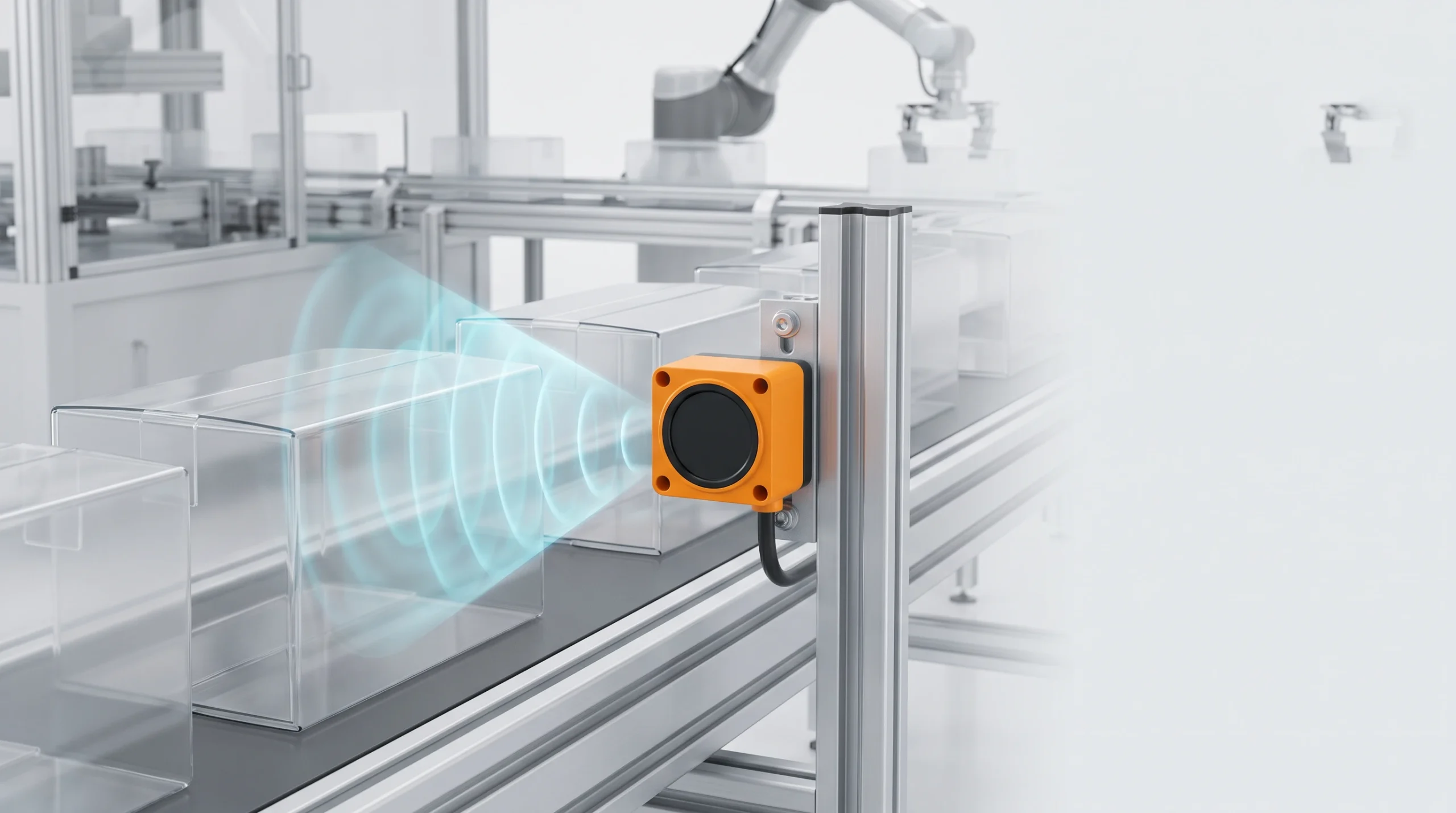
The ISUB100-12F32-E-L35-F7JK400B ultrasonic sensor is designed for applications including transparent packaging position detection, conveyor-line material presence detection, robotic gripper interlocking, and flexible material detection. It reliably detects a wide range of targets, including transparent, translucent, soft-packaged, foam, and rubber materials. By delivering dependable presence/absence and in-position signals to PLCs, it supports position verification, cycle control, automated handling, and process interlocking.